In the ever-evolving landscape of tech careers, full-stack development stands out as a perennial favorite among both bootcamps and college programs. Popularized by its promise of fast-track job-readiness and attractive starting salaries, the full-stack developer path has been widely marketed as a golden ticket to a tech career – especially for those eager to break in quickly via intensive bootcamps or condensed college curricula. In 2025, full-stack development typically encompasses technologies like React.js, Node.js, MongoDB, and Angular, often grouped under acronyms like MERN or MEAN. However, with the tech job market becoming increasingly fluid and competitive – shaped by automation, artificial intelligence (AI), and a dramatic pivot towards DevOps, cloud, and data-centric roles – the long-term prospects of the classic full-stack pathway are under more scrutiny than ever. Let’s find out why Full Stack developers struggle to get hired.
Defining Full-Stack Development
What Is “Full-Stack” Today?
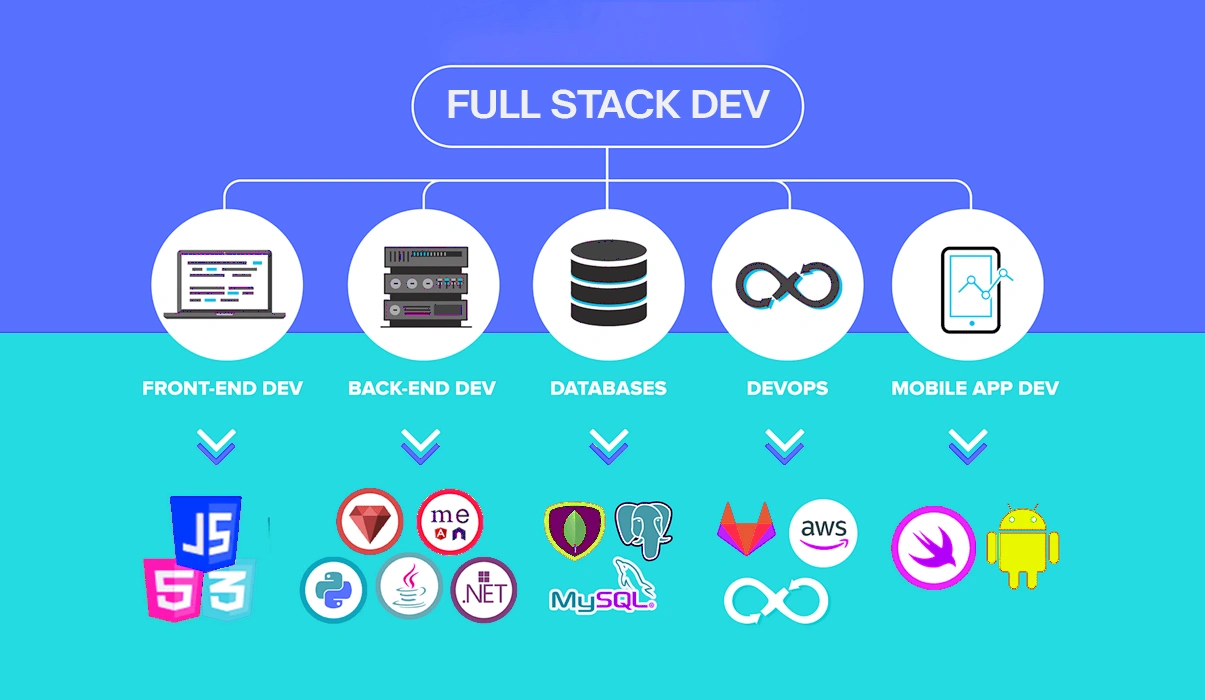
The term “full-stack developer” refers to a software engineer proficient in both the frontend (client-side) and backend (server-side) development of applications. Traditionally, this has meant fluency in at least one frontend JavaScript framework (like React.js or Angular), a backend platform (Node.js), and a modern database solution (MongoDB or similar). Together, these technologies form iconic stacks such as MERN (MongoDB, Express.js, React.js, Node.js) and MEAN (MongoDB, Express.js, Angular, Node.js).
But the scope of full-stack is evolving. Increasingly, expectations now extend to API integrations, cloud deployments, basic DevOps, and security practices. Full-stack developers are often expected to operate across the entire application lifecycle: from designing user interfaces and managing data, to configuring deployment pipelines and basic cloud infrastructure tasks.
Core Technologies in Full-Stack Development:
These skills represent the foundation for most bootcamp and college full-stack curricula in 2025.
The Widespread Appeal (and Over-Promotion) of Full-Stack Careers
Bootcamps and Colleges: Selling a Fast Track to Stability
Coding bootcamps and condensed college certificate programs have aggressively marketed full-stack development as a “get hired quick” career. Promises of six-figure salaries and “job-ready in 3-6 months” messaging dominates their online presence. These programs emphasize practical skills, rapid portfolio creation, and hands-on projects using React.js, Node.js, and MongoDB.
Why the popularity?
Speed: Bootcamps run for as little as 12–24 weeks.
Affordability: Tuition costs (often $5-20k) are much lower than a four-year degree.
Practicality: Curricula align closely with immediate market needs—i.e., junior-level web and mobile application roles.
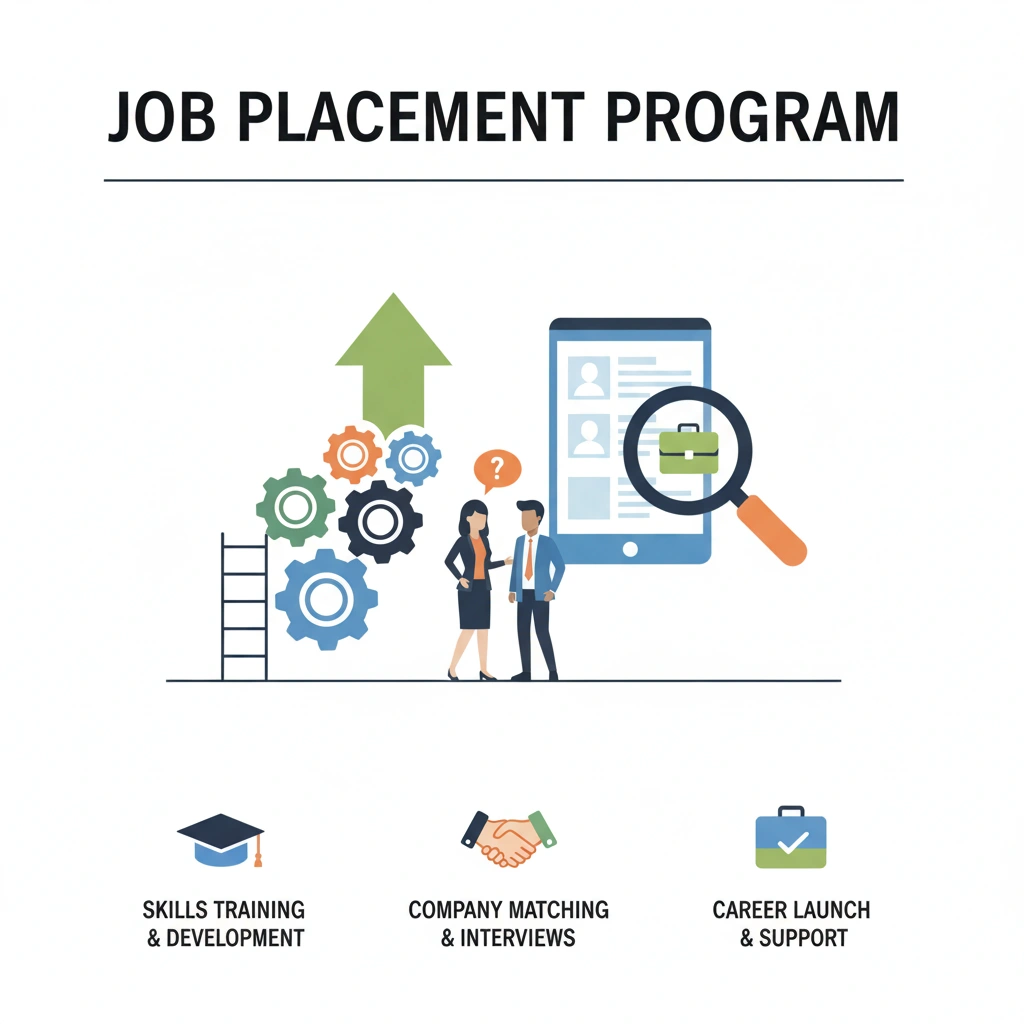
Placement Support: Most offer interview prep and “job guarantee” contracts.
Outcomes touted by bootcamps in 2025 include:
Average starting salaries between $70,000 and $90,000
“Placement rates” above 70% within six months of completion (though many claims are self-reported and lack transparency)
The Hidden Risks: Overstated Market Realities
Despite the genuine opportunities that full-stack training can provide (especially for career switchers and those new to tech), mounting evidence suggests widespread over-promotion:
Many bootcamps and some colleges have been fined for misleading job placement statistics and high-pressure marketing.
The learn-to-code shorthand for job security glosses over complex hiring realities, career longevity concerns, and an evolving market that now values specialization and breadth in emerging tech areas over generalist web dev skills alone.
In summary: Bootcamps and colleges are not always transparent about the saturation of entry-level full-stack roles or the rising bar for long-term success in this space.
Full-Stack Developer Job Market Trends in 2025
Growth, Saturation, and the New Entry-Level RealityStatistical Snapshot
U.S. Bureau of Labor Statistics (BLS): Projected 7% growth in web developer/digital designer jobs from 2024 to 2034, equating to ~14,500 openings annually.
2025 Stack Overflow Developer Survey: Full-stack developers remain the largest segment (~31%) of all developers.
LinkedIn & Industry Reports: Full Stack Developer remains among the Top 10 most in-demand tech jobs; however, annual job posting growth has slowed to 3–8% in major U.S. markets, compared to double digits pre-pandemic.
Entry-Level HeadwindsMultiple recent sources (USA Today, Oxford Economics, BLS) point to a hard truth:
Entry-level tech jobs are getting harder to land.
Between 2022–2025, IT employment for recent grads dropped 8% for those aged 22–27, even as employment for older tech professionals slightly rose.
Hiring rates for developers fell to historic lows: 3.3% in 2025, compared to 4.6% pre-pandemic, making job searches longer and more competitive.
AI-powered automation and low-code platforms are now automating many once-entry-level full-stack tasks, creating more competition for remaining jobs and limiting the classic “start at the bottom” ladder.
Demand for Seasoned, Specialized, or Cross-Disciplinary Talent
Organizations now demand full-stack candidates to manage:
Cloud and DevOps
Security
Platform engineering
Machine learning model integration
This means the bar for “job-ready” goes well beyond classic web developer skills. Candidates must quickly upskill or risk stagnation and redundancy as the bar keeps rising.
The Challenges and Limitations of Full-Stack Roles
1. Market Saturation and Increased Competition
Full-stack developer is no longer the “shortcut” many expect. As the bootcamp model proliferates and entry-level skills become commoditized:
Increased graduates: Hundreds of bootcamp programs and university tracks churn out new “job-ready” full-stack developers every month.
AI tools and low-code platforms: Many repetitive coding and CRUD app development tasks are being automated or delegated to lower-cost solutions, shrinking the traditional junior full-stack job pool.
2. The Jack-of-All-Trades Trap
Being “full-stack” once meant versatility; today, it can carry the risk of being a jack-of-all-trades, master of none.
Entry-level jobs expect breadth, but the lack of depth in any specialty can slow promotions, limit responsibilities, and result in career stagnation.
Senior full-stack roles increasingly demand one or more deep specialties (cloud, security, data, DevOps, AI, etc.) above and beyond generic web app skills.
3. Stagnant Salaries and High Turnover
Salary growth plateaus: Entry-level and mid-level salaries for established full-stack stacks (MERN, MEAN) have begun to stagnate relative to specialist roles in DevOps, cloud, and data science.
High turnover: The tech sector has a churn rate of 13.2%. Lack of career development, upskilling, and clear paths beyond generic full-stack work are leading drivers.
4. Shifting Employer Expectations
In 2025, employer demand is moving away from “just build web apps” to “engineer robust, scalable, secure, and cloud-native systems – fast.”
Full-stack developers are now often expected to handle cloud deployments, CI/CD pipeline management, DevOps automation, and some exposure to ML/data pipelines, not just React/Node/Mongo alone.
Recruiters increasingly reject candidates who “only” know the core full-stack tools, seeking those who can demonstrate hands-on fluency in cloud, CI/CD, and even cross-domain problem-solving.
5. Vulnerability to Automation and Outsourcing
The rise of AI-driven development tools and platforms enables faster development, but diminishes the value of basic, commodity full-stack skills.
Many standard full-stack roles are increasingly offshored or automated, further increasing competition for remaining positions.
College vs Bootcamp: Outcomes and Limitations
How the Education Models DifferCollege Degrees:
Provide theoretical foundations, computer science (CS) fundamentals, and transferable problem-solving skills.
Typically require 2–4 years and are more expensive, but may yield broader career flexibility over time.
Bootcamps:
Focus on practical, job-specific skills— especially full-stack web development.
Shorter in duration (3–6 months), with lower upfront tuition but less theory.
Heavily marketed on the basis of fast job placement; however, placement statistics can be misleading or even manipulated, as confirmed in recent regulatory cases.
Shared Limitations
Both models often “teach to the stack”: They address immediate employer needs (e.g., React, Node.js, MongoDB, Express), but rarely provide enough depth or breadth in:
DevOps/CI-CD
Advanced cloud architecture
Security and compliance
AI/ML integration
Data engineering
Result: Many graduates are “stuck” at junior/mid-level roles, with upskilling or career pivoting becoming urgent within 1–3 years of employment.
The Rise of DevOps, Cloud, AI, and Data-Focused Roles
Market Realignment: Where Are the Jobs Flowing?
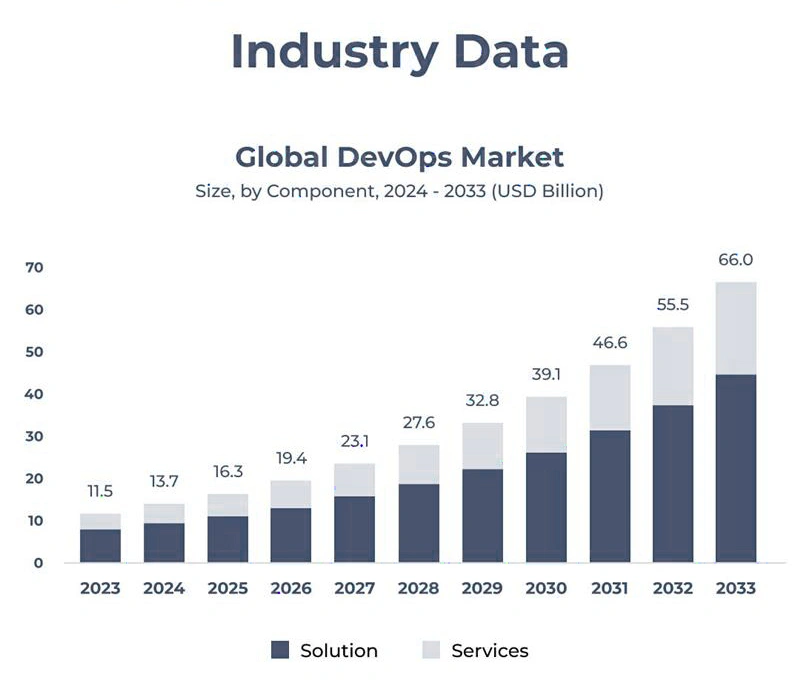
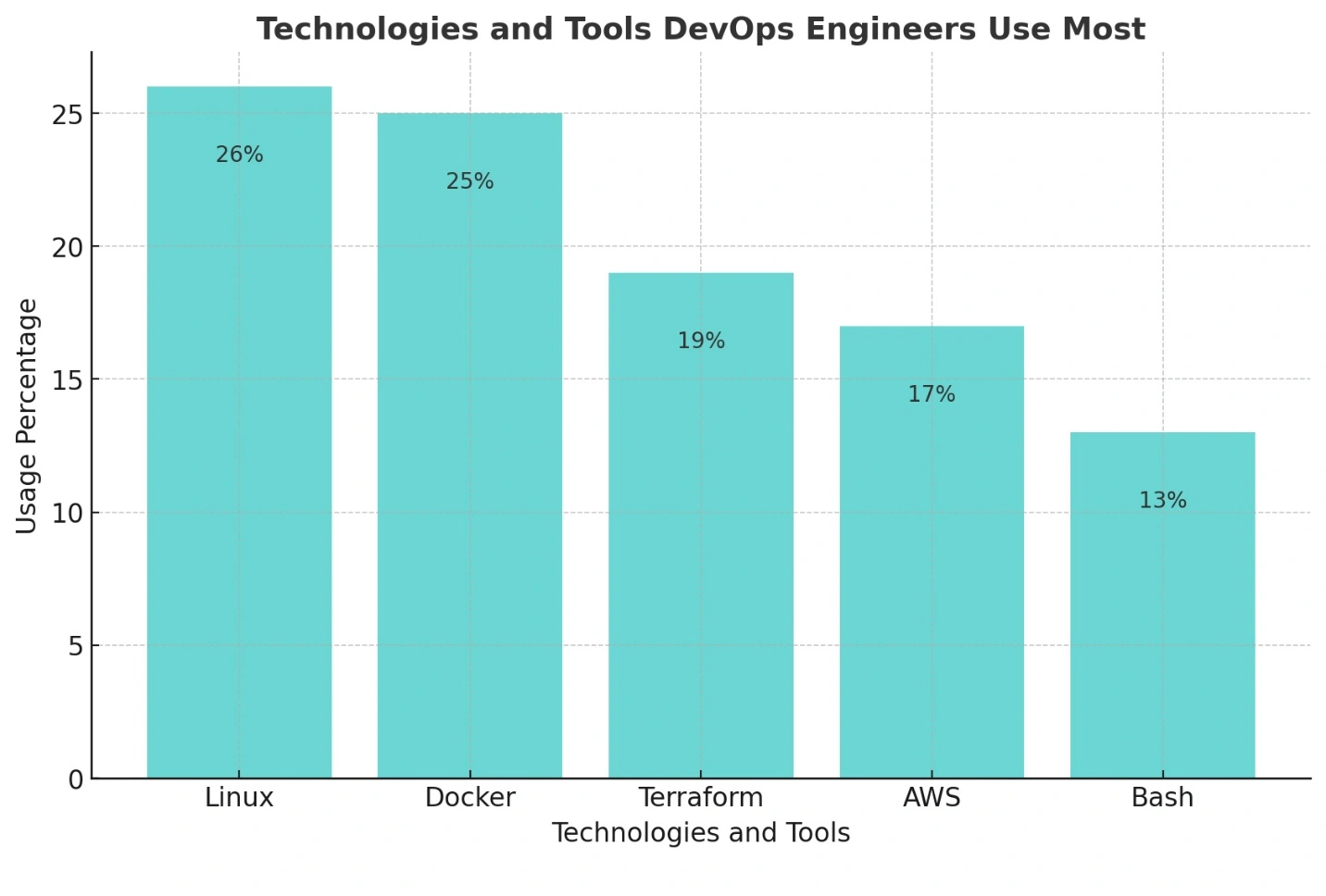
DevOps and Cloud: The New Core SkillsDevOps engineers and cloud platform specialists are among 2025’s most in-demand tech roles:
DevOps embodies automation, reliable deployments, CI/CD pipelines, and infrastructure as code—making it foundational to modern business agility.
Cloud-native development mandates skills in AWS, Azure, or Google Cloud, including containerization (Docker, Kubernetes), serverless, microservices, and ongoing platform engineering tasks.
Data Science and Machine Learning
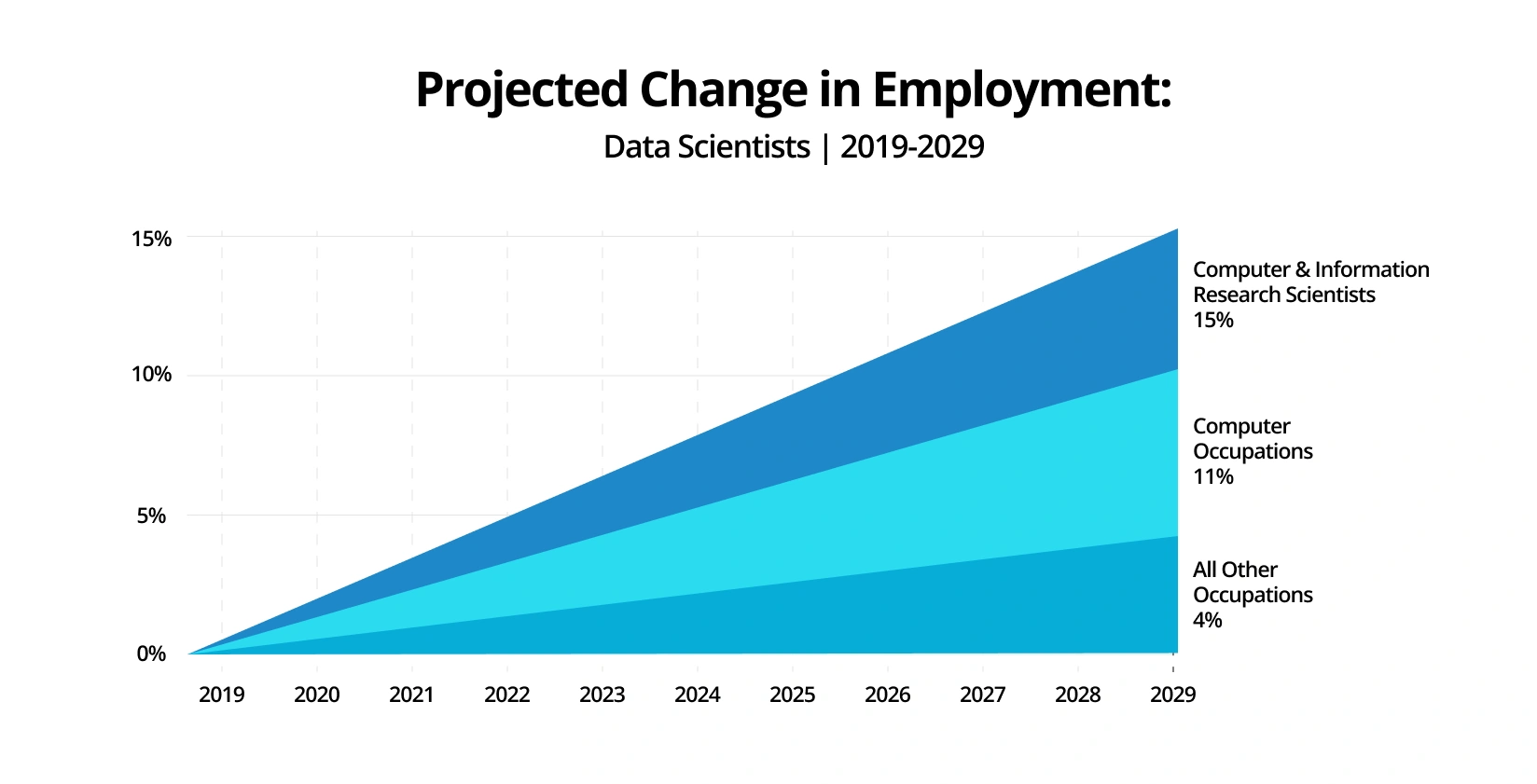
Data science jobs are growing at 36% annually, making them one of the hottest and highest-paying tracks in tech.
Employers prize developers who can build, deploy, and maintain data-driven and AI-enabled systems, not just basic web apps.
Specialized, Carefully Layered Technical Profiles
Employers now frequently seek developers who combine:
Strong back-end (e.g., Java, Python) skills
Cloud/DevOps fluency (AWS, CI/CD, containers)
Some exposure to AI/ML, data analytics, or ETL/data pipelines
The Evidence: Job and Salary Trends
DevOps Engineer average U.S. salary in 2025: $130,000–$175,000; often higher when combined with Java or Data Science backgrounds.
Data Scientist/Machine Learning Engineer average U.S. salary: $150,000–$180,000; top professionals earn $230,000+.
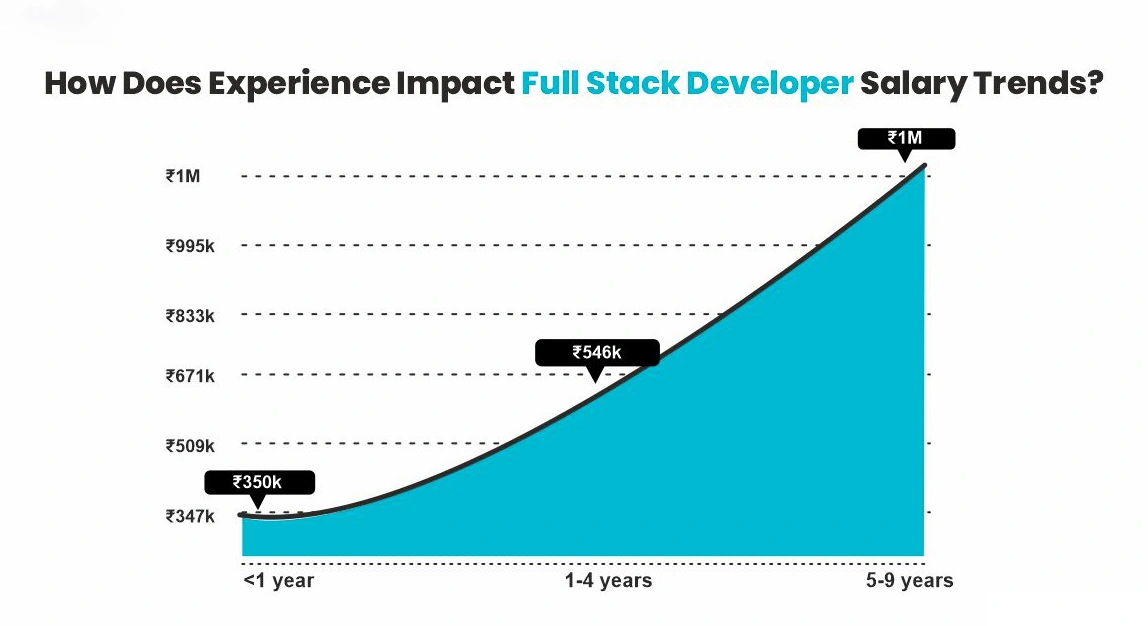
Full-Stack Developer (traditional stack): $90,000–$110,000 median; limited bump unless progressing into architect or team lead roles.
Why a Narrow Full-Stack Focus Can Hinder Long-Term Career Growth
The Core Risks
Job Insecurity: As outlined by USA Today and multiple hiring reports, as AI and automation replace entry-level development tasks, full-stack devs without broader or deeper upskilling are more at risk of redundancy, layoffs, or wage stagnation.
Career Plateaus: Employers balancing limited budgets and evolving needs prefer professionals who can cover DevOps, cloud, security, and data functions, not those with only classic full-stack skills.
Stagnant Promotions: Lacking additional specializations, many full-stack developers hit a ceiling quickly, struggling to transition into senior, architect, or leadership positions without significant retraining.
Saturation and Long-Term Outlook
The oversupply of “standard” full-stack devs, compounded by the rapid proliferation of bootcamp grads, has led to intensifying competition for job placements, longer job searches, and a slower promotional slope. This is further confirmed by lower hiring rates and rising unemployment among recent tech graduates.
Employer bias: Even top tech companies are less inclined to provide “on-the-job” upskilling for junior full-stack hires; they tend to recruit for specialties, advanced certifications, or proven experience in multidomain projects.
Introduction: What Sets SynergisticIT Apart?SynergisticIT’s Java DevOps Full-Stack Job Placement Program was purpose-built to address the shortcomings of narrow stack-focused training. It combines the depth of Java enterprise development with hands-on experience in DevOps, cloud, and data science pipelines, giving participants a broader, highly employable skill set for a resilient tech career.
Java remains one of the top five most used programming languages worldwide, powering scalable enterprise systems and forming the backbone of many modern software architectures. Java’s relevance is further reinforced by its seamless integration with cloud and container technologies, and its preeminence in highly sought-after backend, enterprise, and platform engineering roles.
Side-by-Side Comparison: Traditional Full-Stack vs. SynergisticIT’s Java DevOps Stack
Equips candidates for careers in data science, machine learning, and advanced analytics – fields forecasted to grow 36% annually with average salaries exceeding $126,000, and senior roles at Fortune 500 firms touching $200,000+.
Support and Resources
Coding Interview Questions: Sharpen your skills for all major programming, data science, AI, and AWS interviews
Conclusion: Why a Broader, Future-Proof Tech Stack Wins in 2025
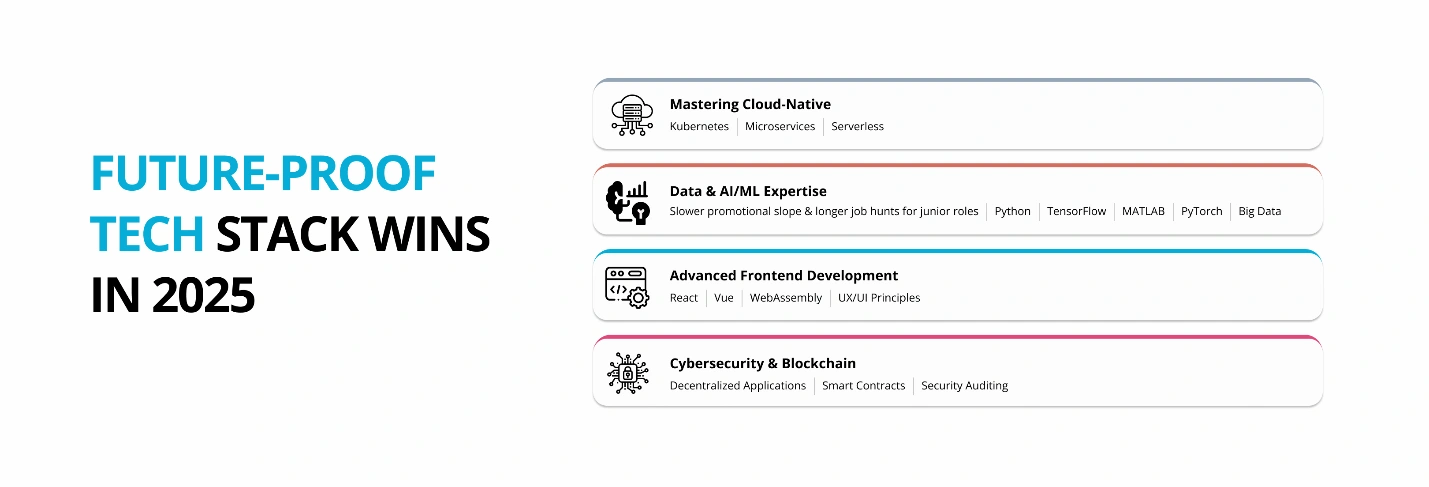
2025’and beyond tech hiring environment is more competitive, nuanced, and fast-changing than ever. While the classic full-stack route (React.js, Node.js, MongoDB, Angular) offered a compelling on-ramp to the industry over the past decade, the best long-term strategy now is to build a broader, more versatile skill set. This means:
Integrating DevOps, cloud, and advanced backend skills – not just frontend/backend basics.
Developing fluency in data engineering, analytics, and AI/ML pipelines, to ride the data-driven wave rather than get left behind.
Focusing on certifiable, industry-recognized expertise (Java, AWS, Azure, PowerBI, TensorFlow, etc.) over generic, bootcamp-only certificates.
Leveraging job placement and branding support that goes beyond portfolio reviews, offering direct engagement with tech recruiters and hiring partners.
Choosing education programs (like SynergisticIT’s) that are tailored to current labor demands, industry feedback, and ongoing upskilling, ensuring that you don’t just land a job, but grow a resilient, prosperous career.
To truly future-proof your tech career in 2025 and beyond, don’t settle for “just full-stack.” Bet on breadth, certified depth, cross-discipline expertise, and a platform like SynergisticIT that bridges education, hands-on skills, and real job placement. The landscape will continue to shift – but your skills, adaptability, and career mobility don’t have to stagnate with it.Useful Links to Explore
If you’re ready to take the next step, don’t just learn to code – master the skills that will keep you in-demand, adaptable, and thriving in a tech market that rewards both breadth and depth. Great! I’m now working on a detailed 3000-word blog post exploring why full-stack development might not be the most sustainable long-term career path. I’ll include market statistics, hiring trends, and a comparison with SynergisticIT’s broader Java DevOps program, along with all the relevant links and resources. This will take me several minutes, so feel free to step away—I’ll keep working in the background. Your report will be saved right here in this conversation. Stay tuned!

 In the ever-evolving landscape of tech careers, full-stack development stands out as a perennial favorite among both bootcamps and college programs. Popularized by its promise of fast-track job-readiness and attractive starting salaries, the full-stack developer path has been widely marketed as a golden ticket to a tech career – especially for those eager to break in quickly via intensive bootcamps or condensed college curricula. In 2025, full-stack development typically encompasses technologies like React.js, Node.js, MongoDB, and Angular, often grouped under acronyms like MERN or MEAN. However, with the tech job market becoming increasingly fluid and competitive – shaped by automation, artificial intelligence (AI), and a dramatic pivot towards DevOps, cloud, and data-centric roles – the long-term prospects of the classic full-stack pathway are under more scrutiny than ever. Let’s find out why Full Stack developers struggle to get hired.
 Core Technologies in Full-Stack Development:
 Statistical Snapshot


 Program Features and Benefits
 The Java Track
 2025’and beyond tech hiring environment is more competitive, nuanced, and fast-changing than ever. While the classic full-stack route (React.js, Node.js, MongoDB, Angular) offered a compelling on-ramp to the industry over the past decade, the best long-term strategy now is to build a broader, more versatile skill set. This means: