How Cloud Computing Is Changing the Developer Role!
In the last decade, cloud computing has revolutionized how software is built, deployed, and scaled. What was once the domain of IT infrastructure teams is now a core competency for developers. Today’s software engineers are expected not just to write code—but to understand how that code runs in distributed environments, interacts with cloud services, and scales globally. Learn how Cloud Computing is changing Developer Roles.
This shift has fundamentally changed the developer role. In this blog, we’ll explore:
How cloud computing is transforming software development
What new skills developers need to thrive in cloud-first environments
And how SynergisticIT’s Job Placement Program equips job seekers with cloud expertise to land high-paying tech roles
What Is Cloud Computing?
Cloud computing refers to the on-demand delivery of computing resources—servers, storage, databases, networking, and software over the internet. Instead of managing physical hardware, developers now build and deploy applications on platforms like:
Amazon Web Services (AWS) – The world’s leading cloud provider, offering over 200 fully featured services, including Amazon EC2 for computing power, Amazon S3 for storage, and AWS Lambda for serverless computing. AWS powers companies like Netflix, which uses it to stream to over 230 million subscribers worldwide.
Microsoft Azure – Known for its strong enterprise integration, Azure provides services like Azure Virtual Machines, Azure SQL Database, and AI-powered analytics tools. Many
Google Cloud Platform (GCP) – Popular for big data, AI, and machine learning services, including BigQuery for analytics and Vertex AI for model deployment. Companies like Spotify use GCP to deliver music recommendations to hundreds of millions of users.
These platforms offer scalable, cost-effective infrastructure that supports everything from small web apps to enterprise-grade systems. According to Synergy Research Group, the global cloud infrastructure market grew to $99 billion in Q2 2025, with AWS holding 30%, Microsoft Azure 20%, and GCP 13% market share.
Also Read: Major Cloud Service Providers
Why Companies Migrate to the Cloud
Some leading use cases:
Microservices & Serverless:
Netflix runs over 700 microservices on AWS, serving 231 million users and saving ~10% in data warehouse storage; monthly AWS costs estimated at $27.8 million.
Amazon, an early microservices adopter, deploys code every ~12 seconds—improving scalability and fault isolation.
AI workloads are fueling cloud growth—with General AI services growing 140–180% in Q2 systems.
Retail giant Walmart processes over 1 million transactions/hour—handling data in the petabyte range.
Hybrid & Multi-Cloud Strategies:
About 92% of organizations use a multi-cloud approach for flexibility and redundancy.
Cost Efficiency & Business Continuity:
Institutions like the University of Texas’ Dell Medical School are moving critical systems like Epic EHR to Rackspace’s private cloud, avoiding costly physical data centers. The EHR cloud hosting market is expected to grow from $63.5B in 2025 to $197B by 2032.
How Cloud Computing Is Changing the Developer Role
1. From Code Writers to Cloud Architects
Developers are no longer just writing code—they’re designing systems that run on cloud infrastructure. This means understanding:
Virtual Machines (VMs) and Containers – VMs (like Amazon EC2 instances) and containers (such as those orchestrated by Kubernetes) allow developers to run applications in isolated environments, ensuring consistency across development, testing, and production. For example, Spotify uses Google Kubernetes Engine to scale microservices for millions of concurrent users.
Load Balancing and Auto-Scaling – Cloud providers offer services (like AWS Elastic Load Balancing or Azure Load Balancer) that distribute traffic across multiple servers and automatically add or remove resources based on demand. Netflix uses AWS auto-scaling to handle spikes during peak streaming hours, ensuring smooth playback for 230+ million subscribers.
Serverless Architecture – Platforms like AWS Lambda, Azure Functions, and Google Cloud Functions let developers run code without managing servers. They pay only for execution time, making it ideal for event-driven applications, chatbots, or real-time analytics pipelines.
Cloud-Native Design Patterns – This includes microservices, API gateways, and event-driven workflows. These patterns improve fault tolerance, allow independent scaling, and support rapid deployment. For instance, Amazon deploys microservice updates every 11.7 seconds, reducing downtime and enabling continuous innovation.
With over 90% of companies now using the cloud (Flexera 2025 State of the Cloud Report), developers must think beyond just functionality. They’re expected to design for:
High availability – ensuring apps run 24/7 with minimal downtime.
Scalability – adapting instantly to fluctuating user demand.
Fault tolerance – building systems that can withstand hardware failures, network outages, or sudden traffic surges without impacting user experience.
This shift is transforming the role of the developer into one that blends software engineering with cloud architecture, making cloud fluency a must-have skill in the modern tech landscape.
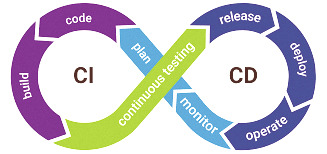
Cloud computing has blurred the lines between development and operations, giving rise to the DevOps culture—a collaborative approach where developers take responsibility for the full application lifecycle. Developers are expected to:
Setting Up CI/CD Pipelines – Continuous Integration (CI) ensures code changes are automatically tested and merged, while Continuous Deployment (CD) pushes updates to production with minimal manual intervention. For example, using Jenkins or GitHub Actions, a developer can automate testing, security scans, and deployment steps to deliver features faster and more reliably. According to GitLab’s 2024 DevSecOps survey, 60% of teams release software multiple times a day thanks to CI/CD automation.
Managing Infrastructure as Code (IaC) – Instead of manually configuring servers, developers use tools like Terraform or AWS CloudFormation to define infrastructure in code. This makes environments repeatable, version-controlled, and easy to scale. Netflix, for instance, uses IaC to replicate its production environment for testing in minutes.
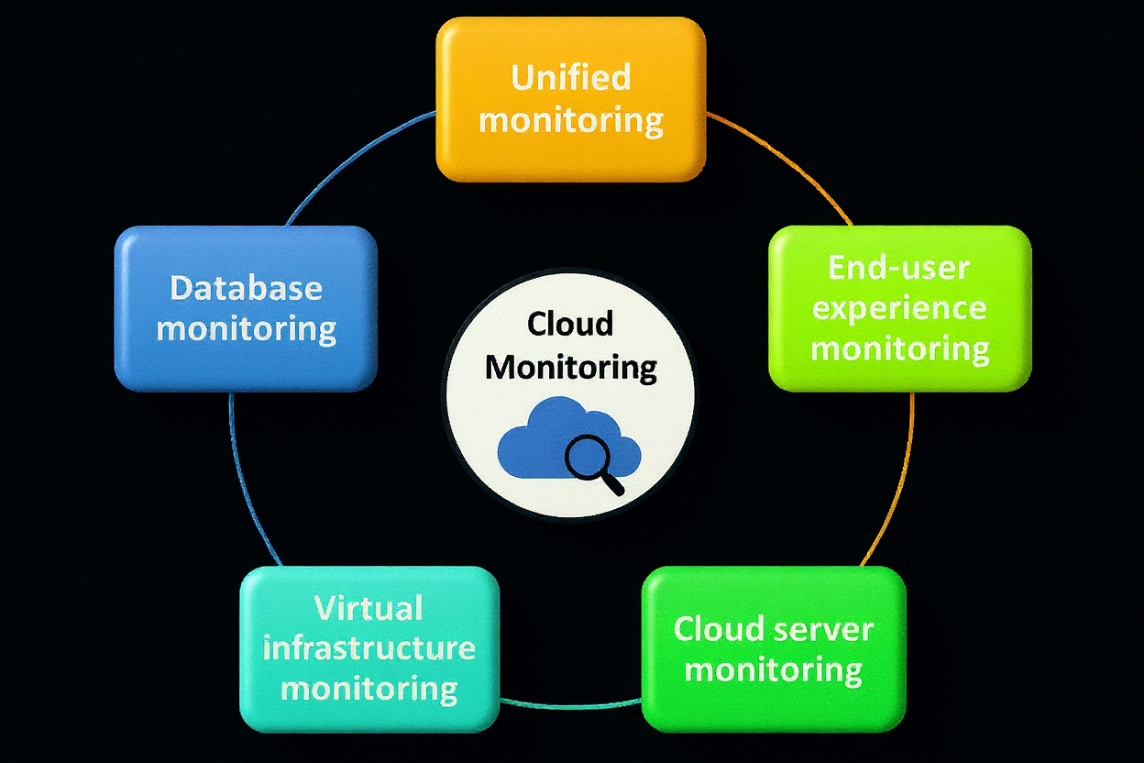
Monitoring Application Performance – Cloud-native monitoring tools like Prometheus, Grafana, or AWS CloudWatch help detect performance issues before they affect users. Google’s Site Reliability Engineering (SRE) teams rely heavily on such metrics to keep services like Gmail running for billions of users with 9% uptime.
Handling Deployments and Rollbacks – Kubernetes and Docker enable developers to release new application versions in small, controlled batches. If something goes wrong, automated rollback scripts restore the previous stable version—minimizing downtime and user disruption.
The modern developer’s toolkit now often includes:
Jenkins – Open-source CI/CD automation server.
GitHubActions – Integrated workflow automation within GitHub.
Docker – Lightweight containerization platform for consistent app environments.
Kubernetes – Container orchestration for scaling and managing microservices.
3. Security and Compliance Awareness
In the era of cloud computing, Security is no longer someone else’s job—it’s baked into the development lifecycle. As applications move to public, private, and hybrid cloud environments, developers must build security into every stage of the software development lifecycle (SDLC).
With cloud deployments, developers must consider:
Authentication and Authorization – Ensuring only the right users and systems can access resources. Modern apps use protocols like OAuth 2.0, OpenID Connect, or SAML for secure identity management. For instance, AWS Cognito lets developers integrate multi-factor authentication (MFA) and single sign-on (SSO) into applications without building it from scratch.
Data Encryption – Protecting sensitive data at rest and in transit is non-negotiable. Services like AWS KMS (Key Management Service) or Azure Key Vault manage encryption keys and automate data encryption. For example, payment processors encrypt cardholder data to comply with PCI DSS standards, ensuring transaction security.
Secure API Design – APIs are now the backbone of cloud applications, and poorly secured APIs are a top attack vector. Developers must use input validation, rate limiting, and authentication tokens to prevent unauthorized access. According to Gartner, API attacks are projected to become the most common cyber threat by 2026, surpassing phishing and ransomware incidents.
Compliance with Industry Standards – Different industries and geographies require adherence to specific regulations:
GDPR (General Data Protection Regulation) for handling EU personal data.
HIPAA for protecting U.S. healthcare information.
SOC 2 for managing customer data in SaaS environments.
FedRAMP for U.S. government cloud services.
Cloud providers often offer compliance-ready services, but developers still need to ensure their applications meet these standards in code and configuration. A 2024 report found that over 58% of security issues in cloud-native applications originate in the application layer, meaning developers are the first line of defense.
4. Cost Optimization and Resource Management
One of the biggest shifts in cloud-based development is the pay-as-you-go pricing model. While this flexibility is a major advantage, it also means poorly designed systems can rack up significant bills. Developers are now expected to think like financial stewards of the infrastructure they build—balancing performance, scalability, and cost efficiency.
Developers must now:
Choosing the Right Instance Types – Cloud providers like AWS, Azure, and GCP offer hundreds of instance options optimized for compute, memory, or storage. Selecting the wrong type can waste resources and inflate costs. For example, AWS offers EC2 Spot Instances that can be up to 90% cheaper than on-demand pricing—ideal for non-critical or batch workloads.
Optimizing Storage and Compute Resources – Developers must decide between storage classes (e.g., Amazon S3 Standard vs. S3 Glacier) and tune compute configurations for workloads. Unused virtual machines or over-provisioned Kubernetes clusters can quickly drive up costs. A 2024 Flexera report found 32% of cloud spend is wasted due to inefficiencies like idle resources.
Monitoring Billing and Usage – Tools like AWS Cost Explorer, Azure Cost Management, and Google Cloud Billing Reports let teams track spending in real time and set alerts when usage spikes unexpectedly. This is crucial for avoiding “bill shock,” especially in apps that can experience sudden viral growth.
Designing Efficient Architectures – Adopting serverless services (AWS Lambda, Azure Functions) or auto-scaling infrastructure ensures you only pay for what you use. For example, Pinterest optimized its AWS architecture, reducing storage costs by millions annually while improving image delivery performance for hundreds of millions of users.
In this way, modern software engineering has gained a financial dimension—developers must now code with both technical efficiency and cost awareness in mind.
5. Global Deployment and Scalability
One of the most transformative aspects of cloud computing is the ability to deploy applications globally with just a few clicks. Developers can now serve users across continents without building and maintaining physical data centers in each location.
This requires:
Understanding CDNs and Edge Computing – Content Delivery Networks (CDNs) like Amazon CloudFront, Azure CDN, or Cloudflare cache and deliver content from servers physically closer to end users, reducing latency and improving load times. For dynamic or compute-heavy workloads, edge computing pushes processing to locations near users. Netflix, for example, uses its Open Connect CDN to deliver high-quality video streams to 230+ million subscribers in over 190 countries with minimal buffering.
Designing for Latency and Failover – When applications run in multiple regions, developers must minimize latency and ensure services stay available even if an entire region goes offline. This involves using traffic routing policies (like AWS Route 53 latency-based routing) and active-active failover setups. Amazon’s retail site, for instance, uses multi-region failover to keep its e-commerce platform online 24/7.
Managing Multi-Region Databases and Services – Databases like Amazon Aurora Global Database, Google Cloud Spanner, or Azure Cosmos DB replicate data across regions to provide low-latency reads and disaster recovery. For example, Google Cloud Spanner serves financial institutions that require sub-second query responses across multiple continents.
Scaling for Demand – Global deployment also means being prepared for sudden traffic spikes—whether from a viral social media post, a holiday shopping rush, or a live event. Auto-scaling policies, combined with load balancing, allow applications to handle millions of simultaneous users without downtime.
According to Gartner, by 2027, over 75% of enterprise-generated data will be processed outside traditional data centers or cloud regions due to edge and distributed computing growth. For developers, this means mastering geo-distribution strategies is no longer optional—it’s a core skill for building reliable, high-performance applications for a global audience.
Why Cloud Skills Are in High Demand
Cloud computing isn’t just a trend—it’s the backbone of modern tech. Companies across industries are migrating to the cloud, and they need developers who can build and maintain cloud-native applications.
Also Read: In-demand skills to get hired in 2025
According to Gartner, global public cloud spending is projected to reach $678 billion in 2025, up from $563 billion in 2024—a growth rate of nearly 20% year-over-year. This surge translates directly into more job openings for cloud-proficient professionals.
Job Market Snapshot (2025)
Role
Avg. Salary
Growth Rate
Common Skills
Cloud Developer
$115K–$145K
27% YoY
AWS, Docker, Kubernetes
Full Stack Developer (Cloud)
$120K–$150K
30% YoY
MERN, CI/CD, GCP
DevOps Engineer
$125K–$160K
33% YoY
Terraform, Jenkins, Azure
Companies hiring cloud-savvy talent range from tech giants like Amazon, Microsoft, and Google to non-tech enterprises such as JPMorgan Chase, Walmart, and Pfizer. Even small startups are launching directly on the cloud to bypass expensive infrastructure investments.
How SynergisticIT’s Job Placement Program Prepares You for Cloud Careers
SynergisticIT’s Job Placement Program is designed to help jobseekers master cloud computing and land full-time tech roles with salaries ranging from $85K to $150K
Here’s how the program supports cloud learning and hiring:
1. Hands-On Cloud Training
SynergisticIT offers project-based training in cloud platforms like:
AWS: EC2, S3, Lambda, RDS, CloudFormation
Azure: App Services, Functions, Cosmos DB
GCP: Compute Engine, Firebase, BigQuery
You’ll learn to:
Deploy applications on cloud infrastructure
Set up serverless functions
Manage databases and storage
Configure IAM roles and permissions
This ensures you’re not just certified—you’re job-ready.
2. Real-World Cloud Projects
You’ll build and deploy full-stack applications using cloud services. Examples include:
E-commerce platforms with AWS Lambda and DynamoDB
Social media dashboards hosted on Azure App Services
RESTful APIs with GCP Cloud Functions and Firestore
CI/CD pipelines using Jenkins and GitHub Actions
These projects demonstrate your ability to work in cloud-native environments—something employers actively look for.
3. Certification Support
SynergisticIT helps candidates prepare for industry-recognized certifications:
AWS Certified Developer – Associate
Microsoft Azure Developer Associate
Google Associate Cloud Engineer
These credentials validate your cloud expertise and boost your resume visibility.
4. DevOps and CI/CD Integration
You’ll learn to:
Build Docker containers
Orchestrate with Kubernetes
Automate deployments with Jenkins
Use Terraform for infrastructure as code
This makes you a versatile candidate for both development and DevOps roles.
5. Resume and LinkedIn Optimization for Cloud Roles
SynergisticIT helps you:
Highlight cloud projects and certifications
Use keywords that align with cloud job descriptions
Showcase DevOps and CI/CD experience
Position yourself as a cloud-ready developer
This increases your chances of getting noticed by recruiters and hiring managers.
6. Behavioral and Technical Interview Prep
Cloud interviews often include:
System design questions
Scenario-based problem solving
Security and scalability discussions
Behavioral questions about collaboration and ownership
SynergisticIT provides:
Mock interviews with feedback
STAR method coaching
System design workshops
Salary negotiation support
You’ll walk into interviews with confidence and clarity.
7. Employer Marketing and Placement Support
Once you’re ready, SynergisticIT:
Markets your profile to tech clients
Schedules interviews
Provides feedback and guidance
Helps you land full-time roles in cloud development, DevOps, and full stack engineering
You’ll be matched with companies actively hiring for cloud-savvy talent.
Success Stories
SynergisticIT has helped thousands of candidates get hired at companies like:
Amazon Web Services
Google Cloud
PayPal
Cisco
IBM
Startups and mid-sized tech firms
Many graduates land roles within 5–7 months, often with no prior cloud experience.
Who Should Learn Cloud Computing?
Cloud computing is essential for:
CS graduates looking to stand out in a competitive market
Career changers transitioning into tech
Bootcamp grads who want to deepen their skillset
Junior developers aiming for mid-level roles
Freelancers and entrepreneurs building scalable apps
If you want to future-proof your career, cloud computing is non-negotiable.
Final Thoughts
Cloud computing has redefined what it means to be a developer. It’s no longer enough to write good code—you must understand how that code runs, scales, and integrates in cloud environments.
SynergisticIT’s Job Placement Program offers:
Hands-on cloud training
Real-world projects
Certification prep
Resume and interview support
Employer connections
And most importantly—results
Whether you’re aiming for backend, full stack, or DevOps roles, SynergisticIT helps you become a cloud-ready developer and land high-paying jobs in today’s tech landscape.
Let’s build your cloud-powered future—starting now.

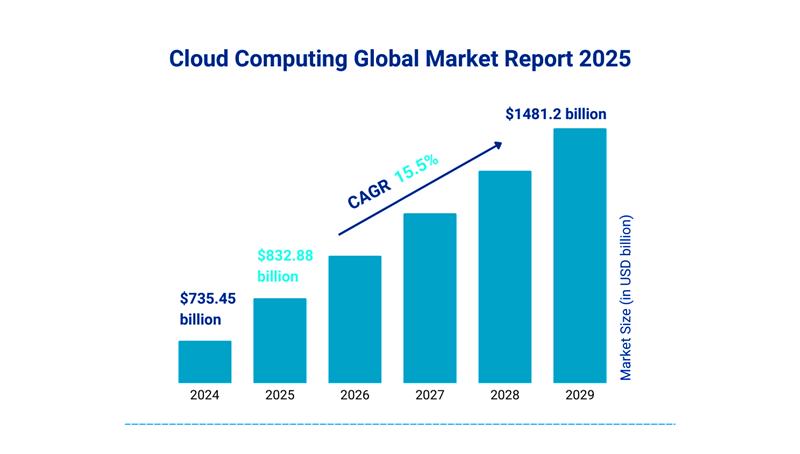 These platforms offer scalable, cost-effective infrastructure that supports everything from small web apps to enterprise-grade systems. According to Synergy Research Group, the global cloud infrastructure market grew to $99 billion in Q2 2025, with AWS holding 30%, Microsoft Azure 20%, and GCP 13% market share.
Also Read: Major Cloud Service Providers
These platforms offer scalable, cost-effective infrastructure that supports everything from small web apps to enterprise-grade systems. According to Synergy Research Group, the global cloud infrastructure market grew to $99 billion in Q2 2025, with AWS holding 30%, Microsoft Azure 20%, and GCP 13% market share.
Also Read: Major Cloud Service Providers

 Here’s how the program supports cloud learning and hiring: