How CS Grads should develop Problem-Solving Skills
Problem-solving skills are at the core of every modern tech role, whether you’re a software engineer resolving bugs, a data scientist untangling datasets, or an IT professional troubleshooting systems. In a world where artificial intelligence and automation are advancing rapidly, employers increasingly view problem-solving ability—the capacity to devise, test, and communicate effective solutions—as the non-negotiable trait across technical careers. Leading technology firms and startups alike consistently rate problem-solving among the top skills in demand for hiring, promotions, and long-term career success. read on to find out How CS Grads should develop Problem-Solving Skills
Developing these skills is more than a checkbox for interviews. It means preparing for the realities of evolving project demands, adapting to new tools, and thriving when systems don’t go as planned. This blog will provide actionable strategies to sharpen your problem-solving abilities, focusing on hands-on techniques such as Data Structures and Algorithms (DSA) practice, leveraging coding challenge platforms like LeetCode and HackerRank, and engaging in real-world coding scenarios. In addition, we’ll highlight how SynergisticIT can accelerate your job search and upskilling journey with comprehensive resources, mentorship, and years of industry experience.
Whether you’re new to tech or looking to move up in your career, read on for detailed guidance, recommended resources, and practical steps that you can implement today.
Why Do Employers Value Problem-Solving So Highly?
It’s no exaggeration to say that problem-solving is the foundation of success in technology. According to a 2023 Stack Overflow report, developers spend an average of 25% of their working hours debugging and solving novel issues, while the World Economic Forum and major employers are forecasting complex problem-solving as the top soft skill for the workforce of 2025.
1. Functionality and Reliability:
Software, systems, and digital products must function correctly—and that means resolving unexpected bugs, adapting to new requirements, and ensuring robust performance. Employers want professionals who can not only write code, but also untangle errors and address bottlenecks under pressure.
2. Adaptability in a Fast-Changing Landscape:
Technology evolves rapidly. New programming languages, shifting frameworks, and emerging paradigms (AI/ML, cloud, cybersecurity) present new challenges almost daily. Strong problem-solving allows tech professionals to pivot, learn on the fly, and remain productive under uncertainty.
3. Career Growth and Opportunities:
Problem-solvers are promoted faster, entrusted with more complex projects, and are sought after by top employers. These skills distinguish candidates in competitive job markets, often more than technical knowledge alone.
4. Team Collaboration and Innovation:
Great solutions often come from diverse teams brainstorming, reviewing each other’s code, and exploring unconventional approaches. Effective problem-solvers help teams overcome blockers, foster creativity, and translate technical innovation into practical business outcomes.
5. End-to-End Project Success:
From gathering requirements to deployment and post-launch support, the ability to identify root causes, generate options, and execute solutions is essential to delivering high-quality products.
In short, while technology may change, the ability to systematically approach problems and drive them to resolution is evergreen, highly marketable, and deeply rewarding.
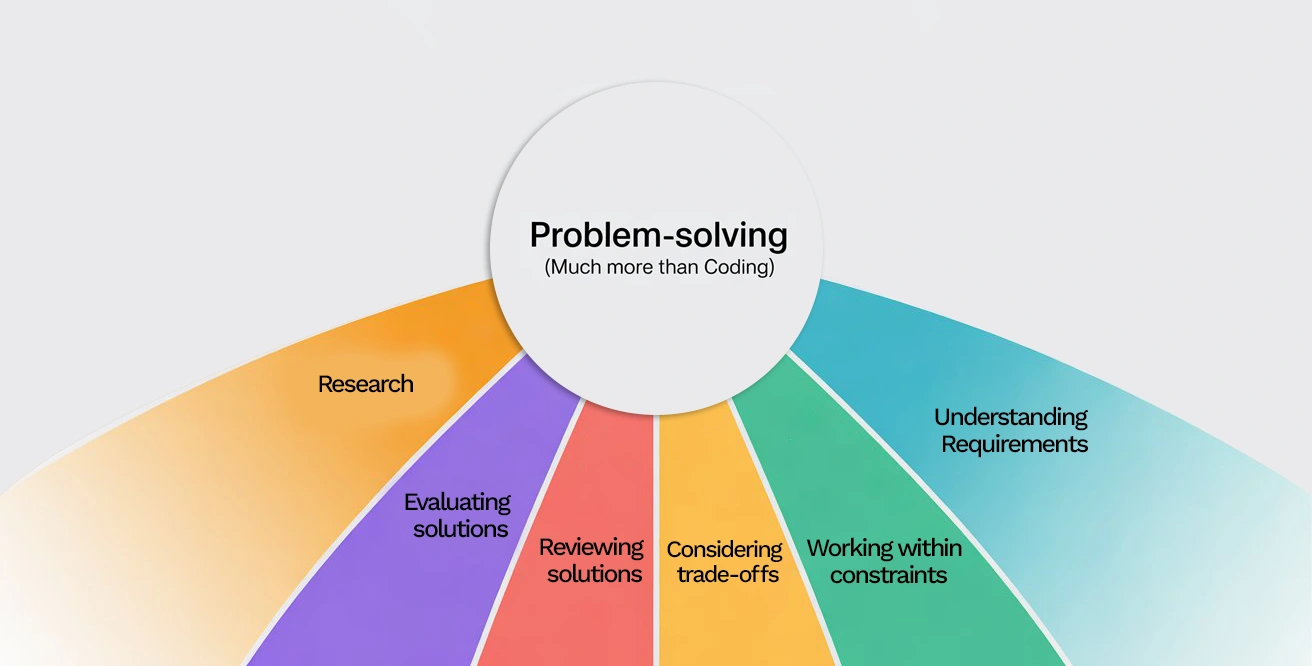
Key Components of Effective Problem-Solving in Tech
A true tech problem-solver blends technical expertise with analytical thinking, creativity, communication, and continuous learning. Let’s break down the essential elements:
1. Critical and Analytical Thinking
Analysis: Break complex issues into smaller parts. Identify patterns, root causes, and relationships within code or system behavior.
Logic: Systematically move from symptoms to possible explanations, weighing evidence and testing hypotheses.
2. Technical Mastery
Coding Skills: Deep understanding of programming languages, DSA, and best practices.
Framework Adaptability: Quickly learning and applying new tools and frameworks to novel problems.
3. Creative and Lateral Thinking
Innovative Approaches: Willingness to think outside established patterns, adapt algorithms, or devise entirely new approaches.
Brainstorming: Generating multiple solution paths; evaluating both standard and unconventional fixes.
4. Communication and Collaboration
Explaining Technical Concepts: Articulating your process and proposed solutions to both technical and non-technical audiences.
Active Listening: Engaging with peer reviews, mentoring, and open-source contributions to refine and expand your skills.
5. Continuous Practice and Feedback
Embracing Failure: Learning from mistakes and using setbacks as opportunities for growth.
Seeking Mentorship: Getting input from more experienced engineers, participating in code reviews, and collaborative projects.
6. Time Management and Resilience
Prioritization: Tackling urgent problems without losing sight of longer-term solutions.
Staying Calm Under Pressure: Maintaining clarity and focus, especially during outages or high-stakes releases.
These components act as both compass and toolkit for thriving in demanding tech environments, and they underpin the actionable strategies to follow.
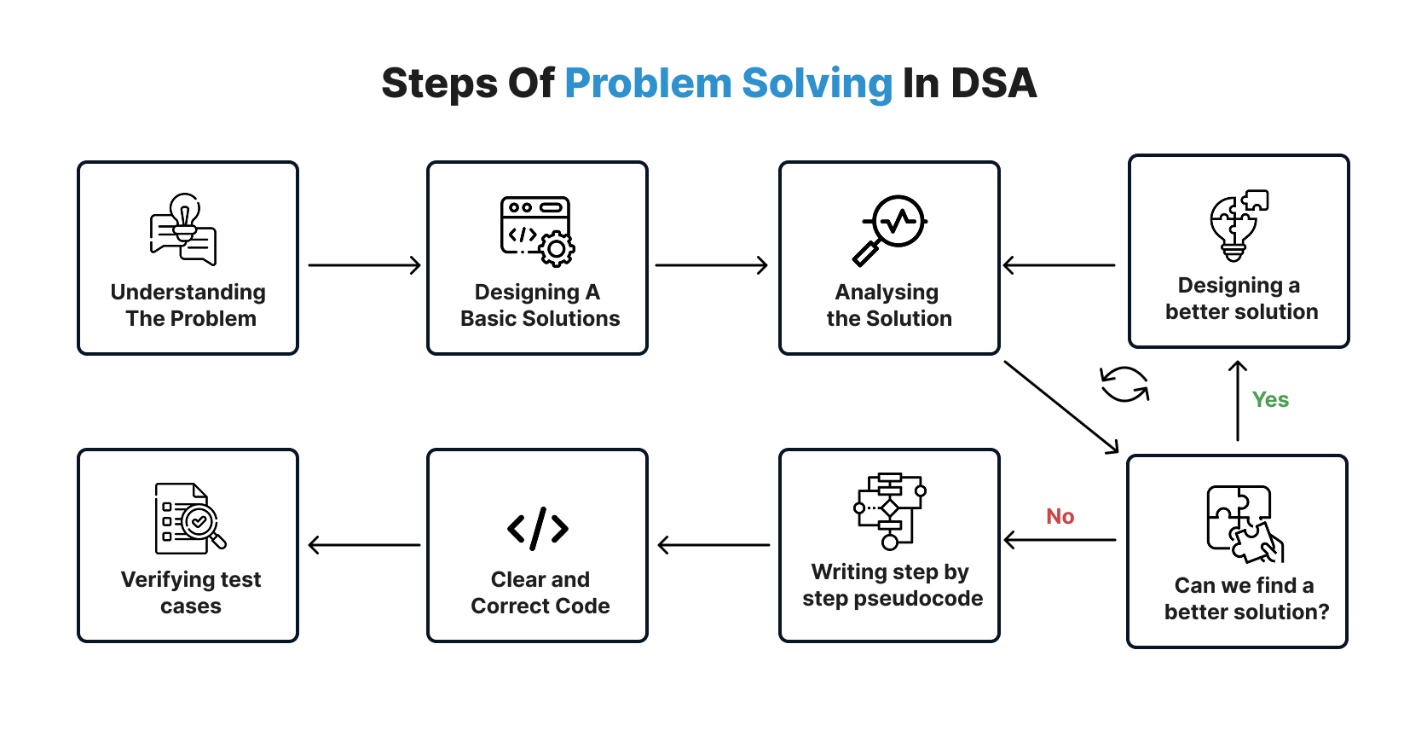
Mastering DSA: The Building Blocks of Tech Problem-Solving
No skill is more closely associated with technical problem-solving in tech than a solid grasp of Data Structures and Algorithms (DSA). This is not just exam preparation—it’s the foundation for efficient programming, scalable design, and practical coding across real-world projects.
Why DSA Should Be Your First Stop
Efficiency: Choosing the right data structure can turn a slow program into a fast, scalable solution. For instance, replacing nested loops with hash maps or binary search drastically improves performance.
Interview Readiness: All major tech firms—Google, Amazon, Meta, Microsoft—design interviews around DSA to assess problem-solving under time constraints.
Real-World Impact: Building apps, processing data, or designing backend systems all rely on strategic use of arrays, trees, graphs, and algorithms like sorting, searching, dynamic programming, and more.
A Practical Roadmap for Learning DSA
Step 1: Master a Programming Language’s Basics
Focus on control flow (loops, conditionals), data types, and OOP (Object Oriented Programming) foundations.
Start with Python, Java, or C++ as most major coding platforms and interviewers support these.
Step 2: Understand and Implement DSA Fundamentals
Arrays, Strings
Linked Lists, Stacks, Queues
Trees, Binary Search Trees, Heaps
Hash Tables (Dictionaries)
Graphs
Sorting and Searching Algorithms
Step 3: Study Common Algorithmic Patterns
Sliding Window
Two Pointers
Divide and Conquer
Recursion and Backtracking
Dynamic Programming
Greedy Algorithms
Step 4: Build and Solve
Don’t just read—implement each data structure or algorithm from scratch.
Tackle classic problems (like those from the Blind 75 or LeetCode’s Top Interview Questions).
Step 5: Progress to Advanced Challenges
Tackle problems requiring complex optimizations or combinations of patterns, such as graph searches (BFS, DFS), dynamic programming on trees, and real-world system design tasks.
By following this roadmap consistently over weeks or months, even beginners can reach job-ready levels of technical problem-solving.
Practicing Problem-Solving with Coding Challenge Platforms
LeetCode: The Interview Gold Standard
LeetCode is recognized globally as the go-to platform for building technical problem-solving muscle:
Features and Benefits
Over 3,500 problems, sorted into easy, medium, and hard, covering all major DSA topics and real company interview tags.
Mock interviews simulating actual technical screens.
Weekly contests and daily challenges to build speed and algorithmic intuition.
Languages supported: Python, Java, C++, JavaScript, many more.
Collaborative forums for alternate solutions and peer discussion.
Strategy for Using LeetCode Effectively
Start with easy problems in arrays and strings.
Move methodically through each key data structure.
Gradually attempt medium and hard problems, especially those tagged by top employers (e.g., “Amazon,” “Google”).
Simulate timed interviews to build real-world stamina and composure.
After solving (or failing to solve) a problem, always review multiple community solutions for new approaches.
HackerRank: Broader Skill Assessment and Collaborative Learning
HackerRank is celebrated for its breadth of challenges and its use by employers for direct job screening.
Key Offerings
Multiple domains, including DSA, databases, AI, SQL, mathematics, and more.
Frequent coding competitions, employer challenges, and company-specific assessments.
Built-in IDE supporting 40+ languages, AI-powered hints, and assistance.
Gamified achievements, badges, and a leaderboard to motivate consistent practice.
Strategy for Using HackerRank
Work through their “Interview Preparation Kit” for a curated study plan.
Practice in timed settings to mirror employer screens.
Engage with skill tracks (SQL, Agile, etc.) for broader technical exposure.
Study company-specific challenges for tailored preparation.
CodeChef, CodeSignal, and Other Real-World Challenge Platforms
Beyond LeetCode and HackerRank, platforms like CodeChef, CodeSignal, and TopCoder provide even more variety and competitive contest environments.
CodeChef: Over 5,000 DSA problems, regular contests, and excellent beginner-to-advanced guided roadmaps.
CodeSignal, TopCoder: Useful for simulating competitive programming conditions and learning to code under pressure, mimicking real-world workflow.
Comparing these platforms can help you find the best fit for your goals and experience level:
Platform
Strengths
Ideal For
LeetCode
Vast question bank, interview focus
Job interviews at top tech firms
HackerRank
Broad skill assessment, gamified progress
Employers, team challenges
CodeChef
Large archive, regular contests, guided DSA
Beginners through advanced
CodeSignal
AI-driven assessments, real company tests
Real-world coding assessment
Each platform offers progress tracking and discussion forums to review alternative approaches—key for deepening problem-solving abilities.
Hands-On Problem-Solving With SynergisticIT
SynergisticIT is not just a bootcamp—it’s an industry-aligned talent accelerator that has helped thousands of candidates land high-paying tech jobs for over 15 years. What sets the program apart is the focus on both the technical and soft skills that make jobseekers stand out in interviews, from the first technical screen to final offer negotiation.
How SynergisticIT Helps Build Problem-Solving Skills
1. Access to Thousands of Actual Client Interview Questions
SynergisticIT’s Interview Questions Resource features thousands of up-to-date questions drawn from real client interviews at Fortune 500 companies, including Google, Amazon, IBM, and PayPal.
Questions span all major technologies, DSA, system design, and behavioral interviews.
Practicing actual client questions prepares you to recognize patterns, anticipate interview formats, and benchmark your performance.
2. Real-World, Project-Based DSA Practice
Live, instructor-led sessions featuring daily DSA problem-solving, code walkthroughs, and group debugging challenges.
Immediate feedback and code correction, mirroring real work environments.
Structured progress from basics to advanced interview shells, often within a few months.
3. Mock Interviews and Behavioral Coaching
Repeated mock interviews, both technical and behavioral, using real-life scenarios and the STAR/ SOAR storytelling frameworks.
Detailed feedback on communication clarity, thought process articulation, and composure under pressure.
Personalized “story bank” development—curating your unique journey for interviews and career growth.
4. Comprehensive Job Placement and Soft Skills Focus
SynergisticIT’s Job Placement Program doesn’t just teach you skills; it markets your profile, assists with resume/LinkedIn optimization, and connects you with a net of 24,000+ tech clients for real job placements.
Training on elevator pitches, communication, and teamwork mastery—crucial for technical interviews and long-term career trajectories.
5. Small Cohorts and Live Mentorship
All sessions conducted live, with small batch sizes, leading to personalized mentorship and peer learning.
Trainers are industry professionals (often with a decade or more of experience) capable of offering up-to-date insights and on-the-job support.
6. Continuous Community and Employer Feedback
By remaining in close contact with corporate partners and participating in events like Oracle CloudWorld and Gartner Data & Analytics Summit, SynergisticIT updates its curriculum according to the latest industry requirements.
Graduates report successful placements at companies like Amazon, Cisco, Google, PayPal, and more, often with starting salaries above the industry average.
7. Flexible Support and Ongoing Learning
Students can retake sessions as needed and receive job search/technical assistance for up to a year after placement.
Help for international students, career changers, and those with employment gaps.
Top employers routinely assess both technical and soft problem-solving skills in interviews. Here’s how to prepare for and excel in both:
Behavioral Interviews: Demonstrate Your Thinking, Not Just the Outcome
Use frameworks like STAR (Situation, Task, Action, Result) or SOAR (Situation, Obstacle, Action, Result) for storytelling.
Prepare 5-7 core “stories” from projects or challenges you’ve overcome. Focus on detailing your thought process, the alternatives you weighed, communication with stakeholders, and how you learned from setbacks or successes.
Show growth, persistence, and teamwork in your narratives.
Example Behavioral Questions:
“Tell me about a time you solved a tough bug under a tight deadline. What steps did you take?”
“Describe a situation where your initial approach didn’t work. How did you pivot and what was the result?”
“How have you handled disagreements when working with a team on a technical problem?”
Mentorship, Community, and the Role of Peer Collaboration
Coders don’t learn in isolation—real growth comes from interaction, feedback, and shared experience. Advantages of strong mentorship and community:
Faster Progress: Bouncing ideas and debugging sessions with mentors or skilled peers shortens learning curves.
Confidence and Networking: Engaging in peer reviews, group mock interviews, and job search communities builds soft skills and exposes you to real-world expectations.
Access to Hidden Opportunities: Many jobs are filled via referrals—active community involvement amplifies job search results.
Career Support and Emotional Resilience: Continuous encouragement, structured goals, and long-term career direction.
Where to Find Tech Mentors and Communities:
Peer review and discussion forums on LeetCode, HackerRank, GitHub, Discord channels, local meetup groups
SynergisticIT’s advantage:
Regular live cohort-based sessions, group projects, and mock interviews. Peer and instructor-led feedback integrated into the curriculum for an always-updating learning experience.
Debugging and Analytical Tools for Problem-Solving
Every developer, from intern to architect, must become adept at debugging and code analysis. Here are essential strategies and tools:
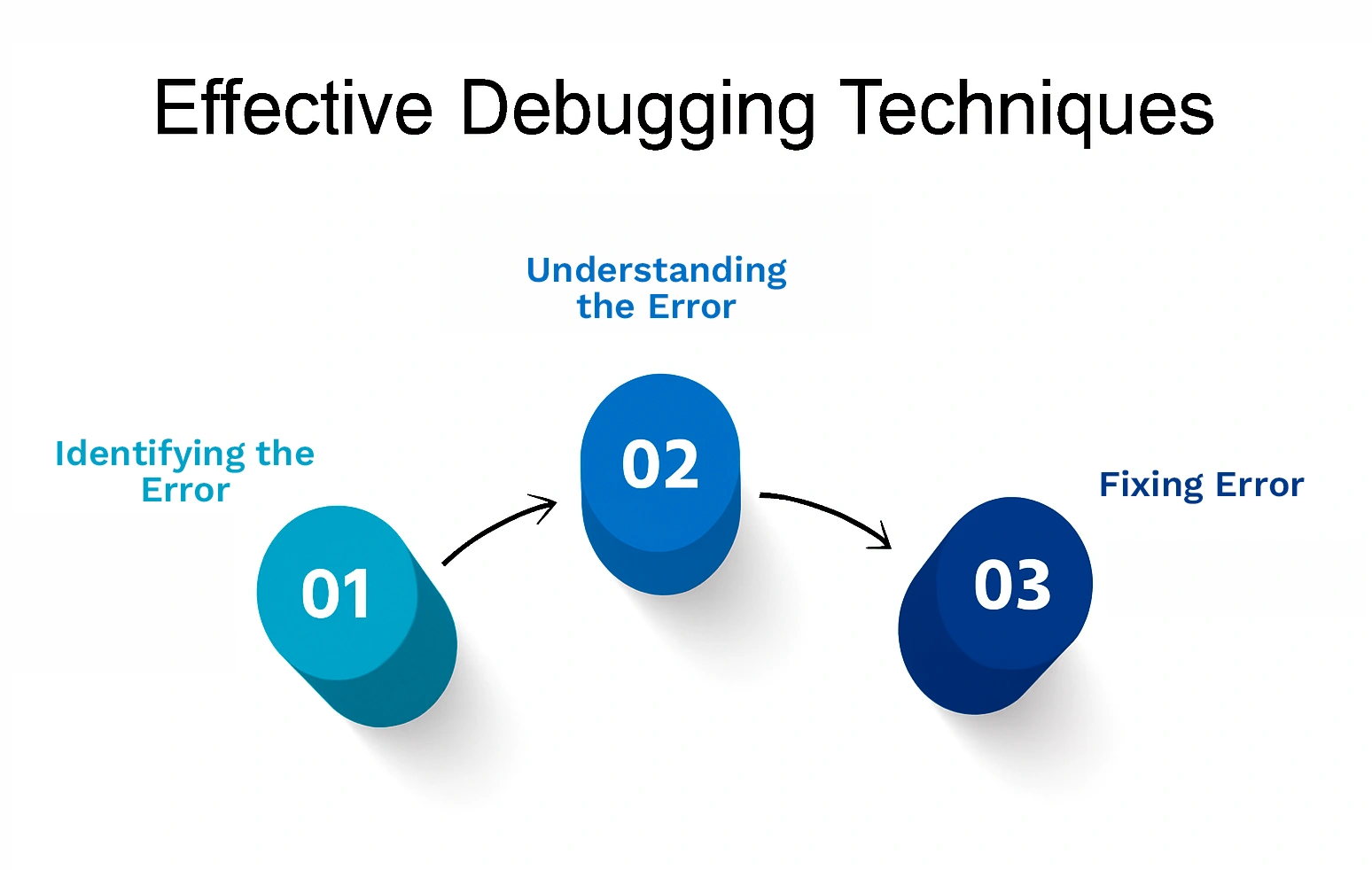
Debugging Best Practices
Understand the Problem: Reproduce bugs reliably before altering code.
Backtrace and Isolate: Work backward from the symptom, use print/log statements, breakpoints, and “divide and conquer” (e.g., binary search over code) to localize issues.
Use Modern Tools:
IDE debuggers (VS Code, IntelliJ, Eclipse)
Browsers’ developer tools (Chrome DevTools for web)
Cloud-based services for distributed tracing and remote debugging
Logging frameworks, static and dynamic code analyzers
Breakpoints and Stepping: Pause code execution to examine state and evaluate variable content in real time.
Unit Testing and Automation: Preempt bugs with automated regression and unit testing frameworks (JUnit, Pytest).
Log Analysis: Use log aggregation tools for pattern recognition and root cause discovery.
Rubber Duck Debugging: Explain your thought process to a peer (or even a rubber duck!); talking out loud often unblocks solutions.
Take Breaks: Stepping away briefly can foster new perspectives and prevent burnout.
Document Lessons Learned: Build your own “story bank” of challenges and how you overcame them.
Track Your Progress
Progress tracker tools (like the DSA Progress Tracker) or spreadsheets help organize what topics and problems you’ve mastered—a motivating, data-driven way to visualize improvement.
Practice in Real-World Scenarios
Participate in open-source projects, contribute bug fixes, or join competitions on Kaggle for applied data science challenges.
Techniques for Measuring and Improving Your Problem-Solving Progress
To ensure you’re growing, track both quantitative and qualitative markers:
Quantitative Measures
Number of problems solved by category (e.g., arrays, trees, dynamic programming).
Daily/weekly practice streaks and contest participation.
Time to solution and solution accuracy on coding challenge platforms.
Mock interview performance scores.
Error reduction rate (how quickly and accurately you can fix new and known bugs).
Qualitative Markers
Clarity in thought process during live code sessions or interviews.
Breadth and depth of solutions (are you applying a wider variety of patterns?).
Ability to explain your approach to peers or interviewers.
Increase in peer/code review contributions and leading discussions.
Success moving from coding drills to project and system design tasks.
Tools like DSA Progress Tracker, built-in analytics on LeetCode/HackerRank, or customized spreadsheets can help you benchmark over time.
Conclusion: Turning Problem-Solving Practice Into Career Opportunity
Problem-solving isn’t just for landing the first job—it’s what will keep your career rising, whatever new tech comes next. Mastering DSA and algorithmic thinking, practicing real coding problems daily, seeking mentorship and community learning, and polishing interview and communication skills are all mandatory for long-term tech success.
While self-study platforms like LeetCode and HackerRank remain vital for independent learning, a structured, industry-aligned program like SynergisticIT can be the game-changer—providing hands-on DSA mastery, personalized feedback, access to real employer questions, and a world-class job placement network.
Ready to take the next step? Check out these SynergisticIT resources to transform your problem-solving journey:
Start building your problem-solving muscle. Practice relentlessly, think aloud, seek feedback, and learn to love the challenge—because in tech, it’s those who solve the hardest problems who build the boldest careers.
If you’re looking for personalized help, advanced interview prep, or a full career pivot, reach out to SynergisticIT and get started on your journey to becoming the next in-demand tech problem-solver.
I’m working on a detailed blog post about how to develop problem-solving skills that employers love, with a spotlight on how SynergisticIT supports jobseekers through hands-on training and extensive resources. This will take me several minutes, so feel free to step away—I’ll keep working in the background. The finished blog will be saved right here in our conversation. Stay tuned!

 Problem-solving skills are at the core of every modern tech role, whether you’re a software engineer resolving bugs, a data scientist untangling datasets, or an IT professional troubleshooting systems. In a world where artificial intelligence and automation are advancing rapidly, employers increasingly view problem-solving ability—the capacity to devise, test, and communicate effective solutions—as the non-negotiable trait across technical careers. Leading technology firms and startups alike consistently rate problem-solving among the top skills in demand for hiring, promotions, and long-term career success. read on to find out How CS Grads should develop Problem-Solving Skills
Developing these skills is more than a checkbox for interviews. It means preparing for the realities of evolving project demands, adapting to new tools, and thriving when systems don’t go as planned. This blog will provide actionable strategies to sharpen your problem-solving abilities, focusing on hands-on techniques such as Data Structures and Algorithms (DSA) practice, leveraging coding challenge platforms like LeetCode and HackerRank, and engaging in real-world coding scenarios. In addition, we’ll highlight how SynergisticIT can accelerate your job search and upskilling journey with comprehensive resources, mentorship, and years of industry experience.
Whether you’re new to tech or looking to move up in your career, read on for detailed guidance, recommended resources, and practical steps that you can implement today.
Problem-solving skills are at the core of every modern tech role, whether you’re a software engineer resolving bugs, a data scientist untangling datasets, or an IT professional troubleshooting systems. In a world where artificial intelligence and automation are advancing rapidly, employers increasingly view problem-solving ability—the capacity to devise, test, and communicate effective solutions—as the non-negotiable trait across technical careers. Leading technology firms and startups alike consistently rate problem-solving among the top skills in demand for hiring, promotions, and long-term career success. read on to find out How CS Grads should develop Problem-Solving Skills
Developing these skills is more than a checkbox for interviews. It means preparing for the realities of evolving project demands, adapting to new tools, and thriving when systems don’t go as planned. This blog will provide actionable strategies to sharpen your problem-solving abilities, focusing on hands-on techniques such as Data Structures and Algorithms (DSA) practice, leveraging coding challenge platforms like LeetCode and HackerRank, and engaging in real-world coding scenarios. In addition, we’ll highlight how SynergisticIT can accelerate your job search and upskilling journey with comprehensive resources, mentorship, and years of industry experience.
Whether you’re new to tech or looking to move up in your career, read on for detailed guidance, recommended resources, and practical steps that you can implement today.

 3. Creative and Lateral Thinking
 Beyond LeetCode and HackerRank, platforms like CodeChef, CodeSignal, and TopCoder provide even more variety and competitive contest environments.
 Resources From SynergisticIT:
 Debugging Best Practices