New Wage-Based H-1B Filing: Why it matters for F1 and OPT students
The United States has signaled the most dramatic shift in high-skilled worker visa policy in decades: the H-1B lottery is ending. Beginning with the FY2027 filing season—expected to open in March 2026—H-1B visas will no longer be awarded by random chance. Reads on to find out what is the New Wage-Based H-1B Filing: Why it matters especially for OPT and F1 Students?
Instead, U.S. Citizenship and Immigration Services (USCIS) will prioritize higher-paying jobs using a wage-level-based selection process. For OPT (Optional Practical Training) students and recent international graduates, this transition has immediate, lasting consequences. The new merit-driven system will directly tie your odds of H-1B approval to your offered salary and professional seniority, with entry-level roles at the greatest risk of exclusion.
This report aims to provide a comprehensive analysis of the wage-based H-1B filing system’s impact on OPT students. It draws from the latest USCIS guidance, Department of Labor (DOL) regulations, prevailing wage data, and insights published by leading policy experts. Importantly, the report demonstrates how SynergisticIT’s Job Placement Program can empower job seekers to secure high-paying technology roles, thereby dramatically improving their eligibility for the new H-1B filing process.
Throughout, we will cite official data, provide practical guidance, and embed direct links to SynergisticIT’s resources—including event videos, blog posts, interview question banks, and candidate outcomes.
The New H-1B Selection Model: From Lottery to Wage-Based Ranking
Why The U.S. Is Ending the H-1B LotteryBackground: For three decades, when H-1B demand exceeded the annual quota (85,000 slots), qualified applicants were selected at random in an electronic lottery. For OPT students and other international graduates, this meant that, regardless of your pay or experience, you had a shot at transitioning from OPT to a long-term work visa if an employer filed your petition.
The Policy Change: Starting with filings for FY2027, the U.S. will rank all H-1B registrations by salary, awarding slots in descending order from the highest DOL (Department of Labor) prevailing wage level down. Only if a wage tier is oversubscribed will a mini-lottery occur among that group.
Rationale: The federal government’s goal is to:
Prioritize high-skilled, high-paid talent.
Dissuade “lowballing” and exploitation of visa holders by staffing firms.
Align with international best practices (e.g., Canada, Australia) that reward economic value rather than chance.
Who Benefits Most?
Those with higher salaries in senior or specialized roles.
Large organizations that already pay at or above the top of the market.
Who’s at Risk?
Recent OPT graduates or entry-level hires (often in Wage Level I or II), who will likely hit the back of the queue or be excluded altogether.
Understanding DOL Prevailing Wage Levels: The Critical Eligibility Factor
The Four Wage Levels That Determine Your H-1B Fate
USCIS will use the Department of Labor’s four wage levels to rank and select petitions:
Wage Level
DOL Definition
Percentile
H-1B Selection Priority
Typical Job Example
Level I
Entry Level
17th
Last
Fresh graduate, OPT starter
Level II
Qualified (some experience)
34th
Middle-Low
1–3 years of experience
Level III
Experienced (median)
50th
Middle-High
3–5 years or team lead
Level IV
Fully Competent (senior/lead)
67th
First
Senior Dev, Tech Lead, Manager
Table: DOL wage levels, percentiles, and H-1B selection order.How it works in practice: When your employer files for H-1B, they must classify the job’s wage level and pay at least the prevailing wage for your SOC (Standard Occupational Classification) and location. USCIS will give first priority to Level IV, then Level III, II, and finally Level I, until the cap is filled.
Why Wage Levels Are So Crucial
H-1B selection slots will be filled “top down”—if there are more applications at Level III and IV than the cap, Level I and II won’t even be considered.
The overwhelming majority of current H-1B filings are at “below median” salaries: About 60% of positions are at Level I or II—these are precisely the categories now most at risk.
Job title, location, and experience level determine wage classification—not just dollar amounts.
The Department of Labor’s Prevailing Wage Framework (DOL’s Role)
How Prevailing Wages Are Set and Why They Matter
The U.S. government mandates that foreign workers on H-1B visas must be paid the greater of:
The actual wage paid to other similarly employed workers at the company, or
The prevailing wage: the average wage paid to similarly employed workers in the occupation, in the area of intended employment
Prevailing wages are set by the Bureau of Labor Statistics (BLS), using data from its Occupational Employment and Wage Statistics program. Every job is mapped to a Standard Occupational Classification (SOC), and wage levels are set at the 17th, 34th, 50th, and 67th percentiles. Employers use the OFLC Wage Search Tool to determine the minimum required salary for their H-1B petition.
Geographic Variation: It’s Not Just the Dollar Amount
Salaries are adjusted by region—meaning a $100,000 job in Des Moines might rate as a higher wage level than a $110,000 job in San Francisco, due to different local wage surveys.
Strategically, location can elevate your wage level, potentially improving your H-1B selection odds without changing your total compensation.
The H-1B “Specialty Occupation” Requirement: What Makes a Job Eligible?
What Is a “Specialty Occupation” for H-1B?
A specialty occupation requires theoretical and practical application of highly specialized knowledge, and at least a bachelor’s degree (or equivalent) in a related field.
Accepted fields span IT, engineering, healthcare, architecture, research, finance, and more—but your degree and job duties must clearly relate.
For the H-1B to succeed, both the job and the applicant must meet strict requirements. Entry-level, generic, or non-specialized roles—even if appearing “tech”—will struggle under the new policy.
How the Wage Level Intersects with “Specialty Occupation”
USCIS scrutinizes Level I IT jobs and has sometimes denied these as “not specialized enough”—now, lower-level offers face even greater hurdles.
Higher wage levels often correlate with greater responsibilities, more technical depth, and clearer proof of “specialty occupation”—helping avoid costly delays or denials.
OPT Students: Why the Shift Demands Your Immediate Attention
The New Reality for OPT Holders
If you are an international student on OPT hoping to secure an H-1B:
In the new system, entry-level jobs (Level I) may be excluded outright, and Level II is only slightly more competitive.
For recent years, about 90% of F-1 students who obtained H-1B status did so with Level I or II jobs—but under the wage-based system, these will almost never be selected.
Delaying H-1B filing until you achieve a Level III or IV position (or salary) may be your only viable strategy.
Unique Challenges for OPT Students
Short Career Window: OPT and STEM OPT together offer, at most, 36 months of work authorization post-graduation.
Rising Salary Bar: Economic modeling predicts that to be competitive, OPT-to-H-1B applicants, especially in software engineering, may need to command $130,000–$150,000+ offers in primary tech hubs, or at least meet Level III/IV prevailing wages for their region.
Field of Specialty Matters: Graduates in AI, data science, and cybersecurity have better chances, as their starting salaries more often cross Level III. By contrast, general business or lower-wage disciplines may rarely reach Level II even with experience.
Timing and Policy Implementation
FY2026 is unaffected, but starting with FY2027—the Class of 2025 and beyond must prepare for wage-based H-1B filing.
Legal challenges are possible, but the process is moving forward rapidly; prudent career planning should assume implementation in 2026.
Wage Levels and H-1B Eligibility: What the Data Shows
How Wage Levels Map to Actual H-1B Selection
Drawing on BLS and DOL statistics, major tech sector data, and economic analyses:
Wage Level
Typical Salary*
Selection Odds (under new system)
Typical Experience/Role
Comment
Level IV (67th%)
$120–150k+ (varies by city, role)
Very high
Senior Dev, Lead Engineer, Manager
First to be selected
Level III (Median)
$100–130k+
High
Experienced Developer (3–5 years)
Selected after Level IV filled
Level II (34th%)
$80–100k+
Low to none
Recent grad with experience, Analyst
Few slots, if any
Level I (17th%)
$65–80k+
Effectively zero
Entry-level, new OPT, basic support
No realistic chance under the new selection
*Note: Actual salary boundaries vary by field and region. For software roles in top cities, the real competitive threshold is often well above these figures(see: EPI H-1B wage analysis).
Data Highlights:
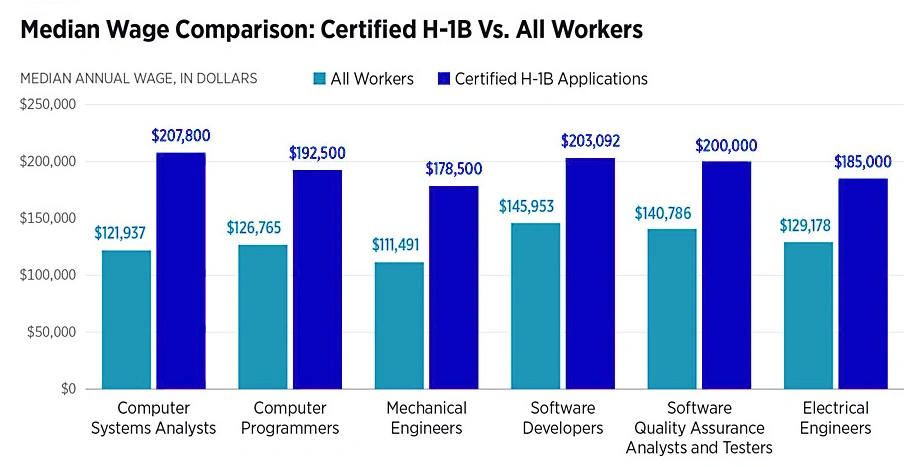
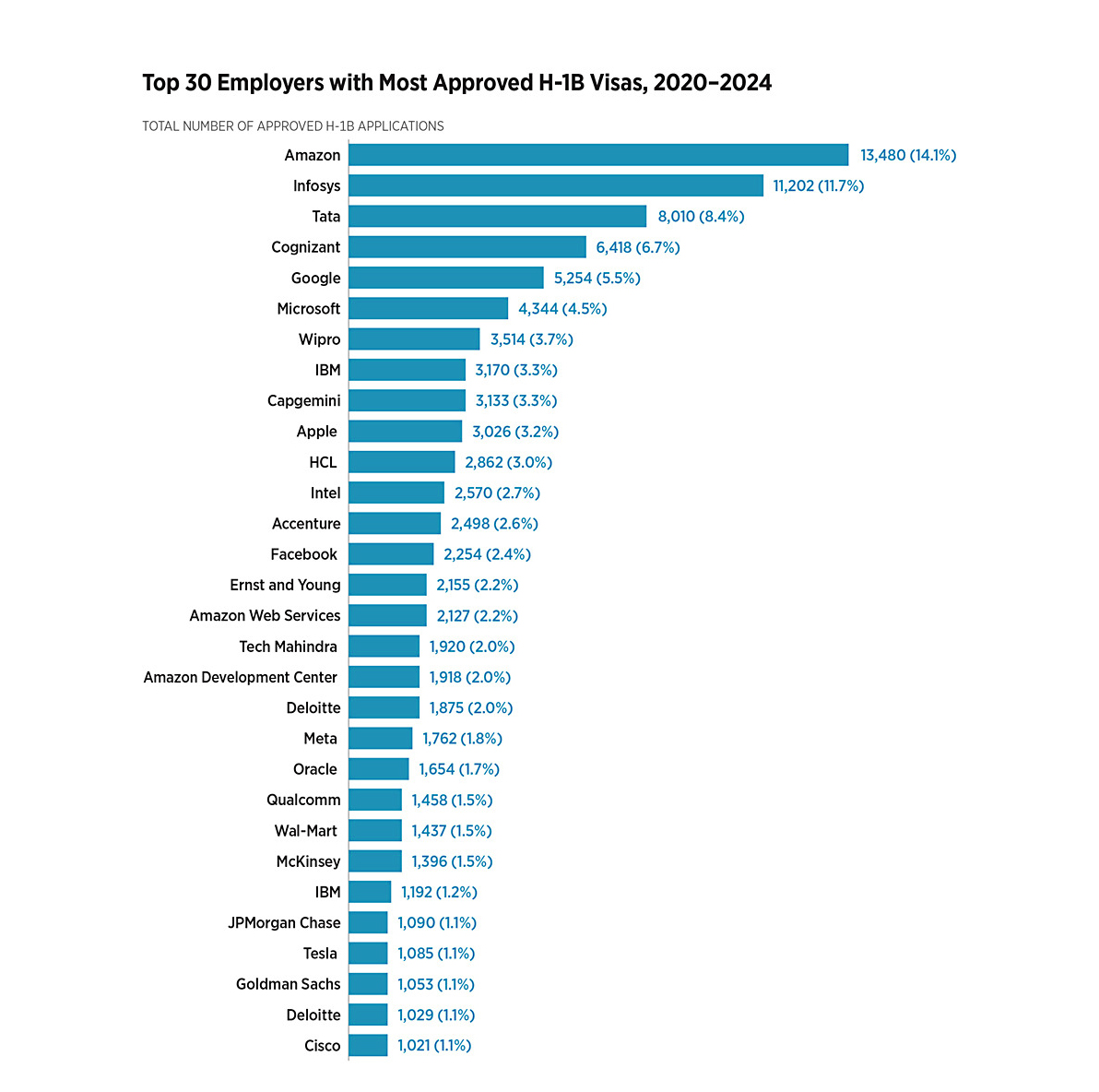
At Facebook, Google, Microsoft, Amazon, and other top H-1B employers, most positions are/were classified as Level I or II—under the new rule, these offers will not be selected, even from elite companies.
In 2019, only 31% of H-1B positions were at or above the median (Level III); just 12% were Level IV.
The Heritage Foundation and BLS simulation for software engineers found median wage offers for successful new H-1B applicants could now exceed the 90th percentile in some fields.
How Consulting Model Limits Professionals in a Merit-Based System?
For many years, international students and professionals have often turned to consulting companies for H-1B sponsorship. While these firms can provide opportunities, they also come with challenges that may affect long-term career growth:
Low Salary Manipulation: Many consulting firms deliberately keep salaries at Level I or Level II to maximize their profit margins, often paying $60,000-$80,000 for roles that should earn $120,000-$150,000 in the direct market.
Skill Stagnation: Consulting companies often place workers in projects that don’t utilize their full potential or provide significant skill development, keeping them dependent and less marketable.
Limited Career Growth: The consulting model prioritizes billable hours over career development, leaving professionals with outdated skills and limited advancement opportunities.
H-1B Vulnerability: With the new weighted system, professionals working through consulting companies at below-market wages will find themselves at the bottom of the selection priority list.
Why the New System Spells Doom for Low-Wage Consulting Models
The Level 3 wage is set at the 50th percentile—the median wage—while Level 4 sits at the 67th percentile, making it the only level above the median. In theory, wage levels should match a worker’s education and experience. However, in practice, employers have had the flexibility to decide which level they assign.
Under the new weighted system, this dynamic will shift. Employers will have strong incentives to offer higher wages to improve their chances of securing an H-1B visa for their candidates. This change makes the traditional consulting company model—built on keeping wages low—less effective. Employers who continue to file applications at Level I will likely struggle, as candidates with Level III or Level IV wages will now be prioritized in the selection process.
Read more: Why OPT students should avoid consultancy companies.
How to Improve Your H-1B Odds: Strategies for Securing Higher Salaries
Career Planning for OPT Students
Target Higher-Paying Roles: Aggressively seek jobs with the potential to qualify for Level III/IV—this may mean focusing on highly specialized, in-demand skills (AI, cloud, DevOps, data science).
Leverage Internships and CPT: Use Curricular Practical Training (CPT) as early as possible to gain U.S. work experience, increasing your market value by the time OPT begins.
Consider Geography: In some cases, relocating to a lower-cost region can bump your wage level relative to the local market, making a $100k offer worth more for H-1B selection in Dallas than in San Francisco(though cost-of-living tradeoffs apply).
Upskill and Certify: Supplement your degree with industry-recognized certifications, practical projects, and verifiable technical proficiencies that move your resume from “entry-level” to “skilled contributor”.
Approaching Employers
Negotiate with Knowledge: Use publicly available tools like the DOL OFLC Wage Search to benchmark the prevailing wage for your SOC and region—and talk to HR about reaching Level III.
Demonstrate Impact: Highlight direct, high-value contributions in your work (e.g., delivered a product feature, led a small team project) rather than just academic experience.
Document Qualifications: For H-1B, documentation must clearly link your degree, job duties, and wage level—gaps or ambiguities can lead to delays or denials.
Seniority, Skills, and the “Skills Premium” in H-1B
Why Seniority Matters More Than Ever
As of July 2025, USCIS will explicitly prioritize both wage level and professional seniority in H-1B selection.
Senior Software Developers, Tech Leads, Data Scientists, or engineers with several years of demonstrable experience are most likely to qualify.
The higher your wage level, the more likely your petition will be chosen before the cap is hit.
Quantifying the Risk for OPT Holders
DHS and policy simulations show stark odds for the new wage system:
Level I H-1B applications: 0% selection rate in practice
Level II: 50% or below, depending on demand
Level III/IV: Near 100% selection until the quota is filled
Ninety percent of F-1 to H-1B applicants have historically been in Level I or II, making them the most affected cohort.
Strategic Implications for OPT Students
OPT students should no longer view the H-1B selection process as a straightforward transition. Instead, strategic planning, upskilling, and wage negotiation are essential. The following are actionable points:
Aim for wage Level II or above to remain competitive. Many employers are willing to pay premiums for in-demand specialties—use this to leapfrog experience requirements.
Pursue roles in high-demand tech fields where even entry-level jobs pay at or above local median wages. Generalist or less-skilled business roles (project management, marketing) often cap at Level I/II and are now highly endangered categories for H-1B selection.
Consider the benefits—and costs—of relocating for a wage premium.
Use OPT and internships to accrue experience and target higher-paying offers next cycle.
Employ hybrid programs (e.g., Day 1 CPT or further STEM studies) to extend legal status while building skills and experience.
Have contingency plans: including cap-exempt H-1B jobs (universities), O-1, TN (for Canadians or Mexicans), or permanent residency in the long term.
The OPT to H-1B Transition and Cap-Gap Extension
How the Transition Works: Updated Steps
The process for OPT students moving to H-1B consists of several well-defined phases, with updated rules for FY2025 onward:
Secure a Qualifying Job Offer: The job must be a “specialty occupation.” Careers in IT, engineering, and analytics are generally eligible.
Employer Files LCA: The role must meet or exceed the prevailing wage for its location and job title.
Employer Registers for H-1B: During the annual registration window (typically March), employer files your details in the pool.
Selection and Petition Filing: If selected, the employer files Form I-129. New version required as of January 17, 2025.
Processing and Evidence: USCIS reviews, may issue “Request for Evidence.” Premium processing is available.
Cap-Gap Extension: If an H-1B petition is filed on time and selected, your OPT status and work authorization are automatically extended until April 1 of the next fiscal year (an extension from the old October 1 rule)—effectively providing an additional six months of employment buffer.
Status Change on Approval: Once H-1B is approved, you switch to H-1B status as of October 1 (if inside the U.S.).
Latest Cap-Gap Policy Updates
Cap-gap is now extended through April 1.
This provides more stability for OPT students, reduces status anxiety, and allows for additional H-1B filing/processing time.
Students whose petitions are not selected or approved must exit the U.S. within a 60-day grace period.
Why SynergisticIT’s Job Placement Program Is a Game-Changer
Directly Addressing the Wage-Based H-1B Challenge
As outlined above, the new H-1B system rewards specialization, higher salaries, and fast-track upskilling. SynergisticIT’s Job Placement Program is designed to address these exact needs for OPT job seekers:
Stronger H-1B Chances: Most consulting companies pay only $65K–$75K. In contrast, with our Job Placement Program, you have a much higher chance of securing offers at Level II wages right from the start. And with the right tech stack and hands-on experience, you can progress to Level III wages within a year, earning significantly higher income as you advance.
Direct Placements: 95% of our students get placed directly with top companies such as Amazon, Meta, Apple, HCL, Microsoft, etc. This helps them negotiate higher salaries than the professionals working under consultancies.
Value to Employers: The H-1B is a specialty occupation visa, which means employers must justify salaries based on advanced skills. With our certifications and premium tech stack training, our candidates become highly skilled. For an employer to hire someone with the same expertise externally, they would often need to pay $200K+. This makes SynergisticIT graduates a great value hire. Consequently, big tech companies like Visa, Wells Fargo, Cisco Systems, Walmart Labs, etc, hire our candidates at salaries from $95k to $150k.
Project- and Certification-Based Training: Focused on the most in-demand technologies, including core/advanced Java, AWS, Python, Data Science, AI, DevOps, MERN stack, and more. Candidates work on real-world industry projects and prepare for certifications from Oracle, AWS, Microsoft, and IBM at no additional cost.
Live Instructor-Led Classes: Daily 5–7 hour training (all live, not recorded) for maximum engagement and real-time problem-solving. Classes of 7–10 candidates ensure personal attention. Curriculum is constantly updated per tech client requirements.
Comprehensive Career and Interview Prep: Personalized guidance covers resume optimization, technical/behavioral interview training, and mock interviews, utilizing a database of 5,000+ recent tech interview questions.
Resume Marketing and Handholding: SynergisticIT markets your profile to an extensive network of 24,000+ tech clients, not just guidance, but an active job search partnership until a job is secured.
Salary Negotiation: Our placement team works specifically to secure offers that meet or exceed the Level III threshold ($157K+). We understand that in the new weighted system, your salary isn’t just about financial success—it’s about visa security.
Proven Outcomes: Salary and Placement Metrics
Average Graduate Salary: $85,000+ (range $81,000–$150,000), with many securing offers that comfortably meet or exceed prevailing wage Level III or IV.
Placement Rate: 91.5%—exceptionally high compared to many bootcamps and university programs.
Employer Network: Partners and alumni placed at Google, Apple, eBay, Intel, Cisco, Deloitte, PayPal, Wells Fargo, Bank of America, and other industry leaders.
First-Job Success: 90% land their first-ever U.S. job via SynergisticIT’s placement process.
Return on Investment: Tuition structure is aligned with success—partial upfront fee, remaining balance paid only after landing a qualifying job ($81k+), with a cap and refund option if a job is not secured.
Transparent, Measurable ROI
Unlike traditional university programs or less-focused bootcamps, SynergisticIT provides detailed transparency on placement, real salary outcomes, and candid program reviews. See their candidate outcomes and ROI comparisons.
SynergisticIT Program Offerings, Curriculum, and Certification Tracks
Tech Tracks in High Demand
Java Job Placement Program: Core & advanced Java, Spring Boot, Microservices, DevOps, Data Structures & Algorithms, cloud integration—target salary: $90,000–$150,000.
Data Science/AI/ML Program: Advanced data analytics, visualization, engineering, business intelligence, machine learning—target salary: $86,000–$150,000.
AWS/MERN/Python: Cloud engineer, full-stack, and AI-focused program variants.
All tracks are aligned with the most in-demand tech roles per employer demand, ensuring wage offers above local and national medians.
Practicals and Certification
Certifications: Oracle Certified Java Professional, AWS DevOps Professional, Microsoft Azure, Snowflake, and others available at no cost.
Skills in Focus: Java, AWS, Python, AI, Data Science, DevOps, SQL, MERN, Cloud, Data Engineering, Machine Learning.
Hands-On Learning: Live projects, coding assignments, and mock interviews tailored to match real client interview patterns.
Key Resources and Links
SynergisticIT provides an extensive range of resources for skill building and career prep:
SynergisticIT’s impact is regularly featured at Oracle CloudWorld, Gartner Data & Analytics Summit, and top tech publications.Alumni Testimonials: “The reason we chose you from hundreds of other candidates is because we already have had great success with SynergisticIT candidates and they are doing great work on our projects.” — Google recruiter.
Over 90% placement rate within the first job search.
Graduates placed at leading tech companies (Google, Apple, PayPal, Cisco, Deloitte, and more).
Students routinely surpass the minimum wage thresholds needed for H-1B selection.
SynergisticIT: Industry Impact and Media Recognition
SynergisticIT is recognized by clients and partners for:
High candidate quality and job-market readiness.
Favorable student outcomes and return on investment for aspiring tech professionals.
Their hybrid approach—combining technical bootcamp, staffing network, and skill-based placement—addresses the precise problems the wage-based H-1B system is designed to solve: ensuring only well-compensated, highly skilled international talent flows into the U.S. workforce.
Is there any chance of H-1B selection at Level I?
Under the new system, Level I roles (often offered to recent grads) are almost certainly excluded from selection unless caps are severely underfilled (which is unprecedented given demand).
What about research or university jobs?
Some nonprofit, educational, or government research jobs are “cap exempt” and not subject to the new wage ranking; however, private sector jobs—including almost all software roles—fall under the new rules.
Can location help my H-1B chances?
Yes. The wage level is tied to the local cost-of-labor; some students may find their offers are a higher percentile in mid-sized U.S. cities than major hubs—even for the same nominal salary. However, employer willingness and cost-of-living must also be considered.
Are salary and seniority the only ways to improve H-1B selection odds?
These are the major levers. However, specializing in in-demand fields, gaining certifications, and strategically marketing yourself (with programs like SynergisticIT) all raise your wage level and H-1B competitiveness.
What alternative visa paths exist if I don’t qualify under the wage-based H-1B?
Possibilities include the O-1 (extraordinary ability), L-1 (intracompany transfer), or pursuing careers with cap-exempt employers.
Conclusion: The New Mindset for International Students
The end of the H-1B lottery and transition to wage-based selection is a “hard reset” for OPT students and early-career international professionals. Gone are the days when luck, a willing sponsor, and any job offer would suffice. From now on, your H-1B odds are dictated by your salary, skillset, and the level of position you can secure.
For OPT graduates, the single most important action you can take is to strategically upskill and market yourself into Level III or higher jobs by the time of H-1B registration. That means targeting specializations, investing in robust training and certifications, carefully considering job geography, and leveraging the career-launching power of proven placement programs like SynergisticIT’s Job Placement Program.
SynergisticIT stands out as a proven bridge to this new reality. Their Job Placement Program directly addresses the skills, salary, and job search strategies required for wage-based H-1B success. With transparent outcomes, industry connections, and best-in-class career support, SynergisticIT can be the difference between “waiting in line” and standing at the front when the selections begin.
Don’t wait—begin optimizing your resume, building targeted skills, connecting to high-value employers, and gathering the evidence and credentials that will push your H-1B registration to the top of the wage-based queue.
Explore Further:
Remember: The American Dream is still alive for the most skilled, market-driven talent. But OPT students must now plan, skill, and negotiate smarter than ever before. The wage-based H-1B era has arrived—make sure you’re ready to compete at the top.

 The United States has signaled the most dramatic shift in high-skilled worker visa policy in decades: the H-1B lottery is ending. Beginning with the FY2027 filing season—expected to open in March 2026—H-1B visas will no longer be awarded by random chance. Reads on to find out what is the New Wage-Based H-1B Filing: Why it matters especially for OPT and F1 Students?
Instead, U.S. Citizenship and Immigration Services (USCIS) will prioritize higher-paying jobs using a wage-level-based selection process. For OPT (Optional Practical Training) students and recent international graduates, this transition has immediate, lasting consequences. The new merit-driven system will directly tie your odds of H-1B approval to your offered salary and professional seniority, with entry-level roles at the greatest risk of exclusion.
This report aims to provide a comprehensive analysis of the wage-based H-1B filing system’s impact on OPT students. It draws from the latest USCIS guidance, Department of Labor (DOL) regulations, prevailing wage data, and insights published by leading policy experts. Importantly, the report demonstrates how SynergisticIT’s Job Placement Program can empower job seekers to secure high-paying technology roles, thereby dramatically improving their eligibility for the new H-1B filing process.
Throughout, we will cite official data, provide practical guidance, and embed direct links to SynergisticIT’s resources—including event videos, blog posts, interview question banks, and candidate outcomes.
The United States has signaled the most dramatic shift in high-skilled worker visa policy in decades: the H-1B lottery is ending. Beginning with the FY2027 filing season—expected to open in March 2026—H-1B visas will no longer be awarded by random chance. Reads on to find out what is the New Wage-Based H-1B Filing: Why it matters especially for OPT and F1 Students?
Instead, U.S. Citizenship and Immigration Services (USCIS) will prioritize higher-paying jobs using a wage-level-based selection process. For OPT (Optional Practical Training) students and recent international graduates, this transition has immediate, lasting consequences. The new merit-driven system will directly tie your odds of H-1B approval to your offered salary and professional seniority, with entry-level roles at the greatest risk of exclusion.
This report aims to provide a comprehensive analysis of the wage-based H-1B filing system’s impact on OPT students. It draws from the latest USCIS guidance, Department of Labor (DOL) regulations, prevailing wage data, and insights published by leading policy experts. Importantly, the report demonstrates how SynergisticIT’s Job Placement Program can empower job seekers to secure high-paying technology roles, thereby dramatically improving their eligibility for the new H-1B filing process.
Throughout, we will cite official data, provide practical guidance, and embed direct links to SynergisticIT’s resources—including event videos, blog posts, interview question banks, and candidate outcomes.
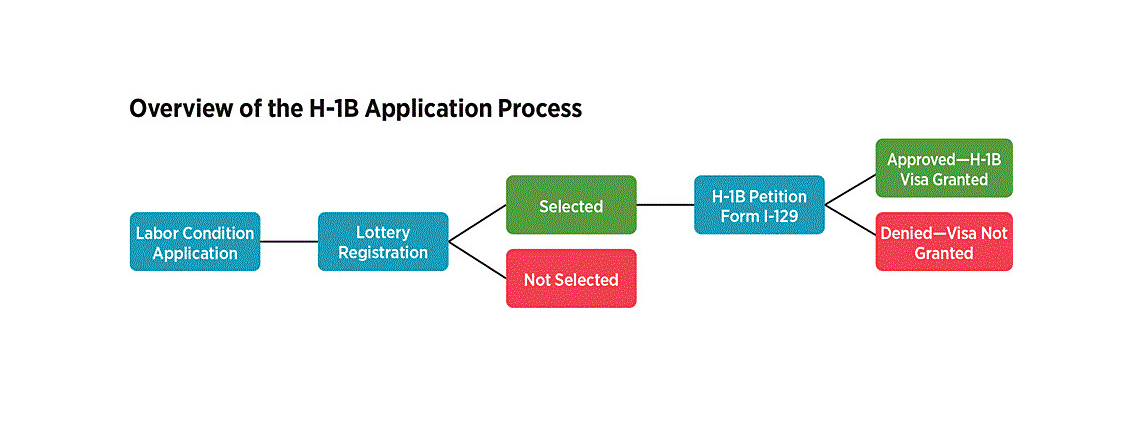 The Policy Change: Starting with filings for FY2027, the U.S. will rank all H-1B registrations by salary, awarding slots in descending order from the highest DOL (Department of Labor) prevailing wage level down. Only if a wage tier is oversubscribed will a mini-lottery occur among that group.
Rationale: The federal government’s goal is to:
The Policy Change: Starting with filings for FY2027, the U.S. will rank all H-1B registrations by salary, awarding slots in descending order from the highest DOL (Department of Labor) prevailing wage level down. Only if a wage tier is oversubscribed will a mini-lottery occur among that group.
Rationale: The federal government’s goal is to:

 Career Planning for OPT Students

 As outlined above, the new H-1B system rewards specialization, higher salaries, and fast-track upskilling. SynergisticIT’s Job Placement Program is designed to address these exact needs for OPT job seekers: